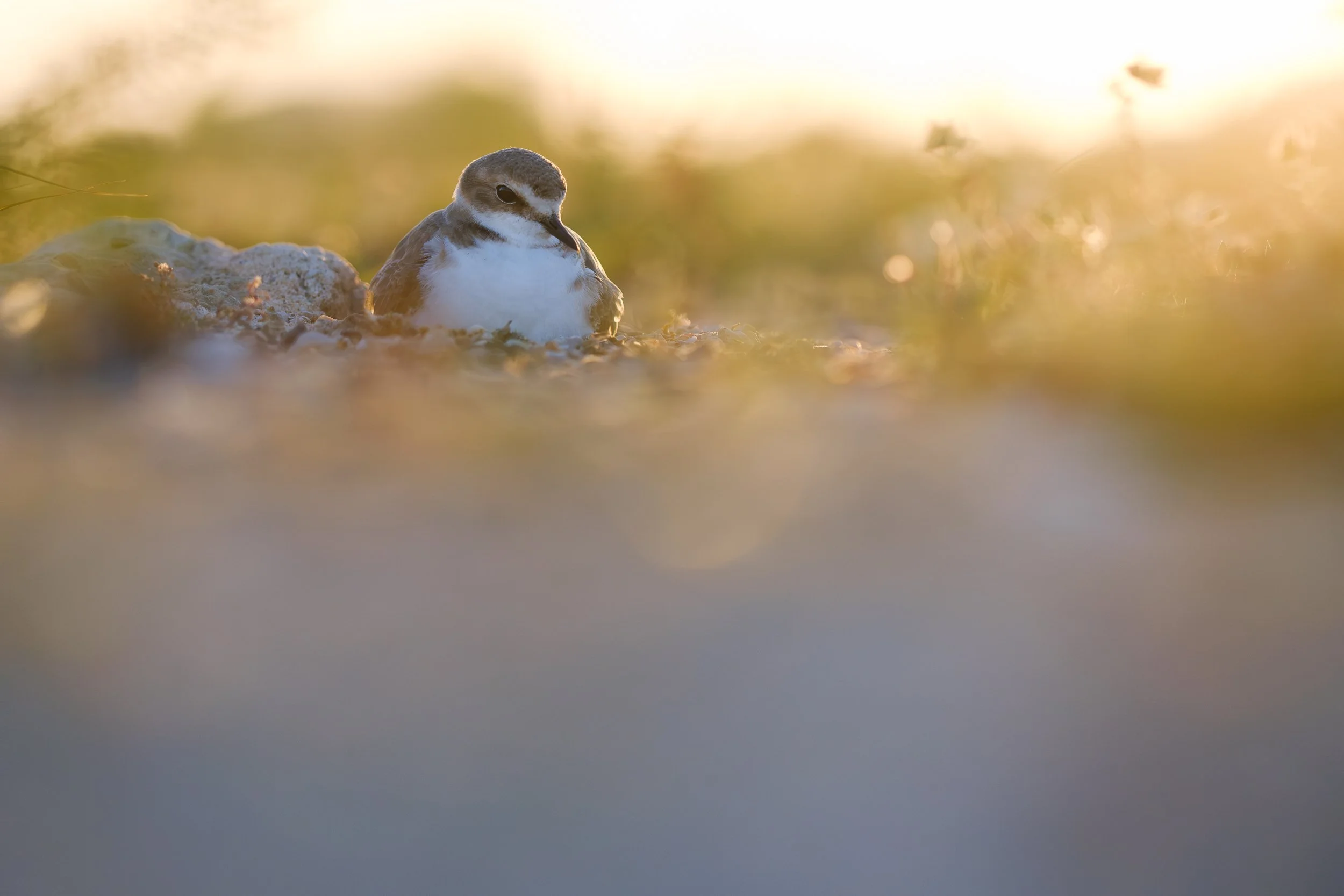
Fragile
Over time, I have devoted ever more attention to photographing nests, particularly those of the Kentish Plover and the Little Tern. It is work that calls for a degree of patience and presence, and it has drawn me closer to the way in which these two species conduct their nesting.
From that attention came Fragile — a collection with no great pretensions, but with a clear intention: to show the extraordinary care that these birds invest in each nest, if we can even call it that, in each egg, in each moment of life that begins there.
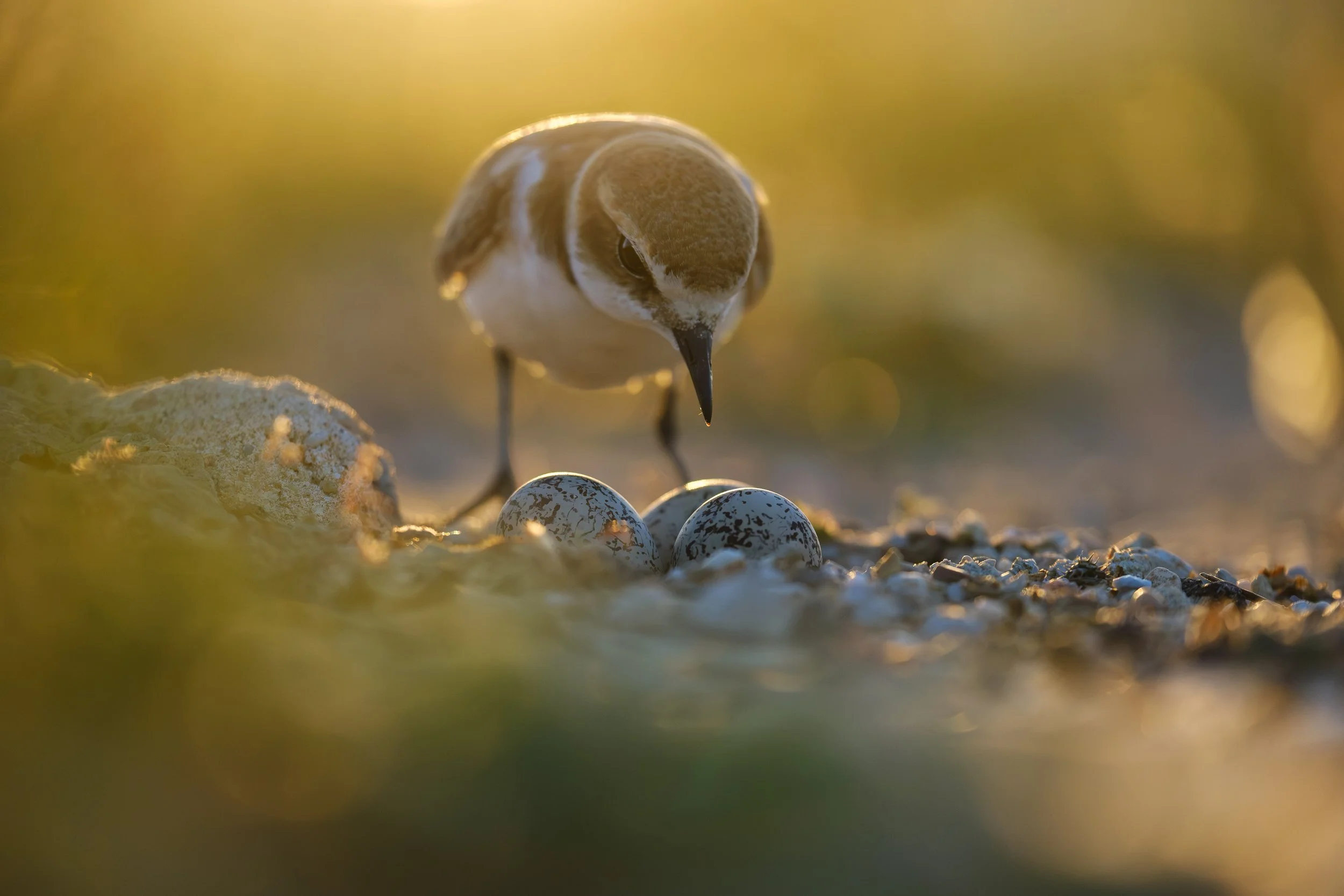
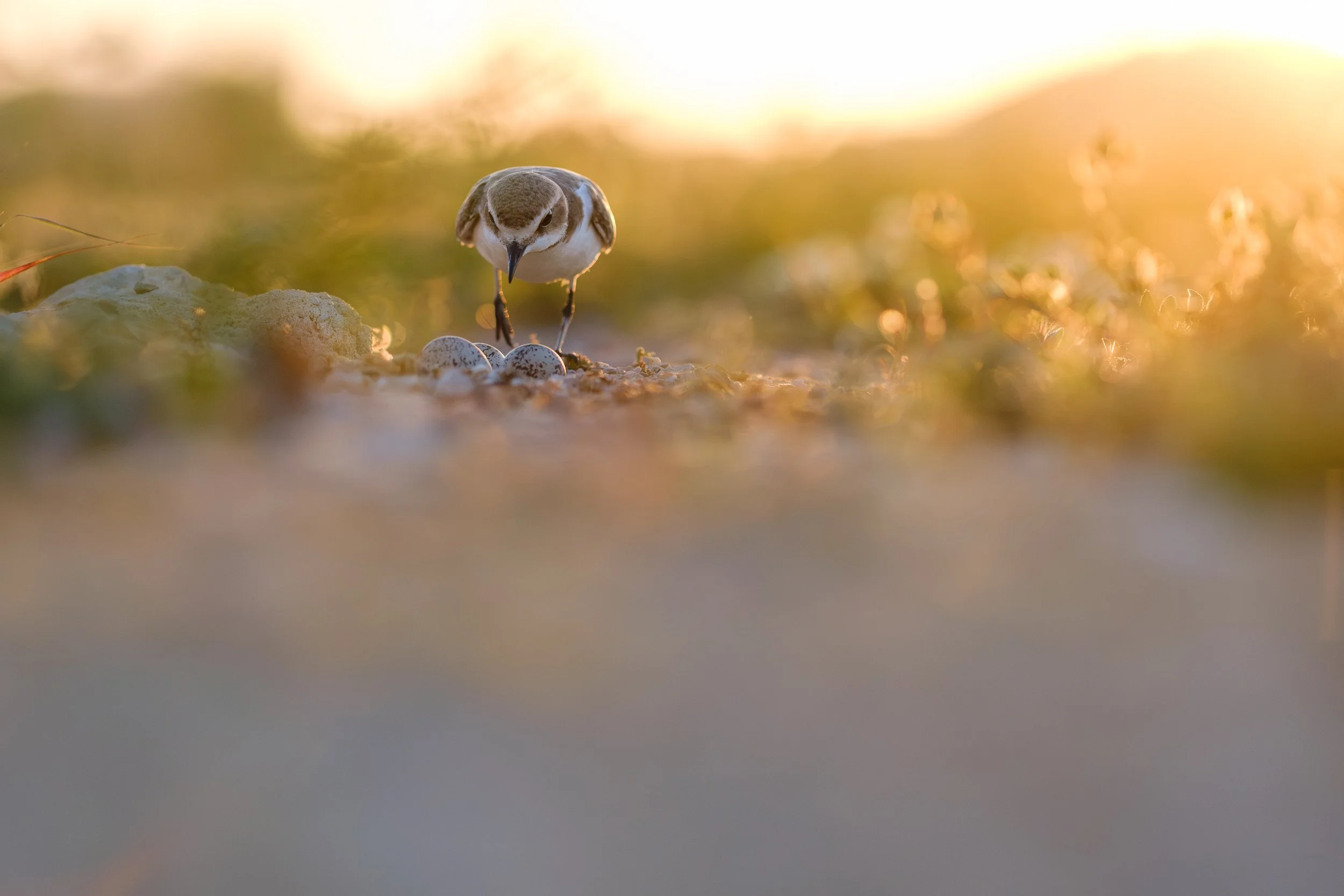
More specifically, the Kentish Plover. The nest is almost invisible. A small scrape in the ground, sometimes flanked by fragments of shell or tiny pebbles that serve both as camouflage and as a rough boundary for the nest itself. The eggs — three as a rule, and in truth I have never seen fewer or more — are nearly impossible to distinguish visually from the surrounding terrain. Anyone who does not know what they are looking for will walk straight past them. It is precisely that invisibility which affords them some margin of survival in such an exposed environment.
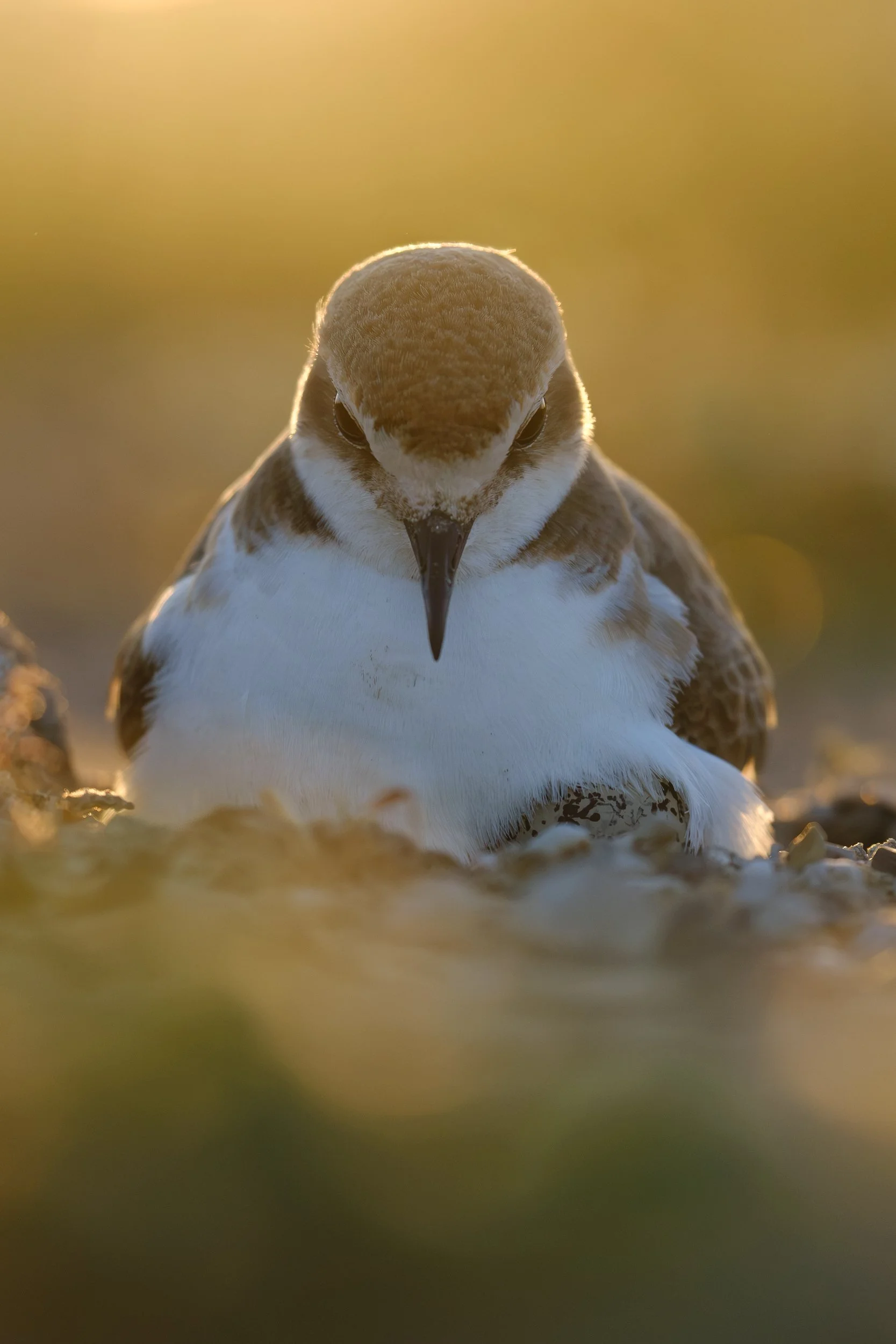
What strikes me most about this species — and about the Little Tern as well — when one spends a good while observing them, is the dedication with which both parents protect the nest. The pair take turns incubating over the course of roughly four weeks. The sitting adult remains perfectly still for long stretches, trusting entirely in its own camouflage. But when a threat draws near, the response shifts — and this is where things become truly remarkable. The adult leaves the nest discreetly and begins to feign injury. It drags one wing along the ground, lowers its body, hesitates, deliberately exposing itself to draw the attention of whatever is approaching. It is an extraordinarily convincing performance. The bird appears on the verge of collapse, and that is precisely what may save the brood: luring the intruder away from the eggs whilst the other adult keeps watch from a distance.
For anyone out photographing who encounters this behaviour, it is also an unmistakable signal that one has already come too close. Nest photography is a contentious subject — I am well aware of that — but all wildlife photography, without exception, carries some impact. In this particular case, however, if one approaches with a camera once or twice a day, and provided one avoids doing so on rainy or unusually cold days, the impact is, in my view, minimal. Not that I use it as an excuse, but I suspect that dog walkers passing through must cause considerably more stress.
Kentish Plovers, though, have a remarkable tolerance for our presence, and may set up their nests in areas of heavy footfall: the verges of paths, car parks, informal beach access points. At the end of the day, they do not ask for much — only enough space to do what they have always done: lay three eggs and defend, with everything they have, the fragile possibility of a new generation.
Ao longo do tempo, fui dedicando cada vez mais atenção a fotografar ninhos, em particular aos de Borrelho-de-coleira-interrompida e de Chilreta. É um trabalho que pede alguma paciência e presença, e que me foi aproximando do modo como estas duas espécies conduzem a nidificação.
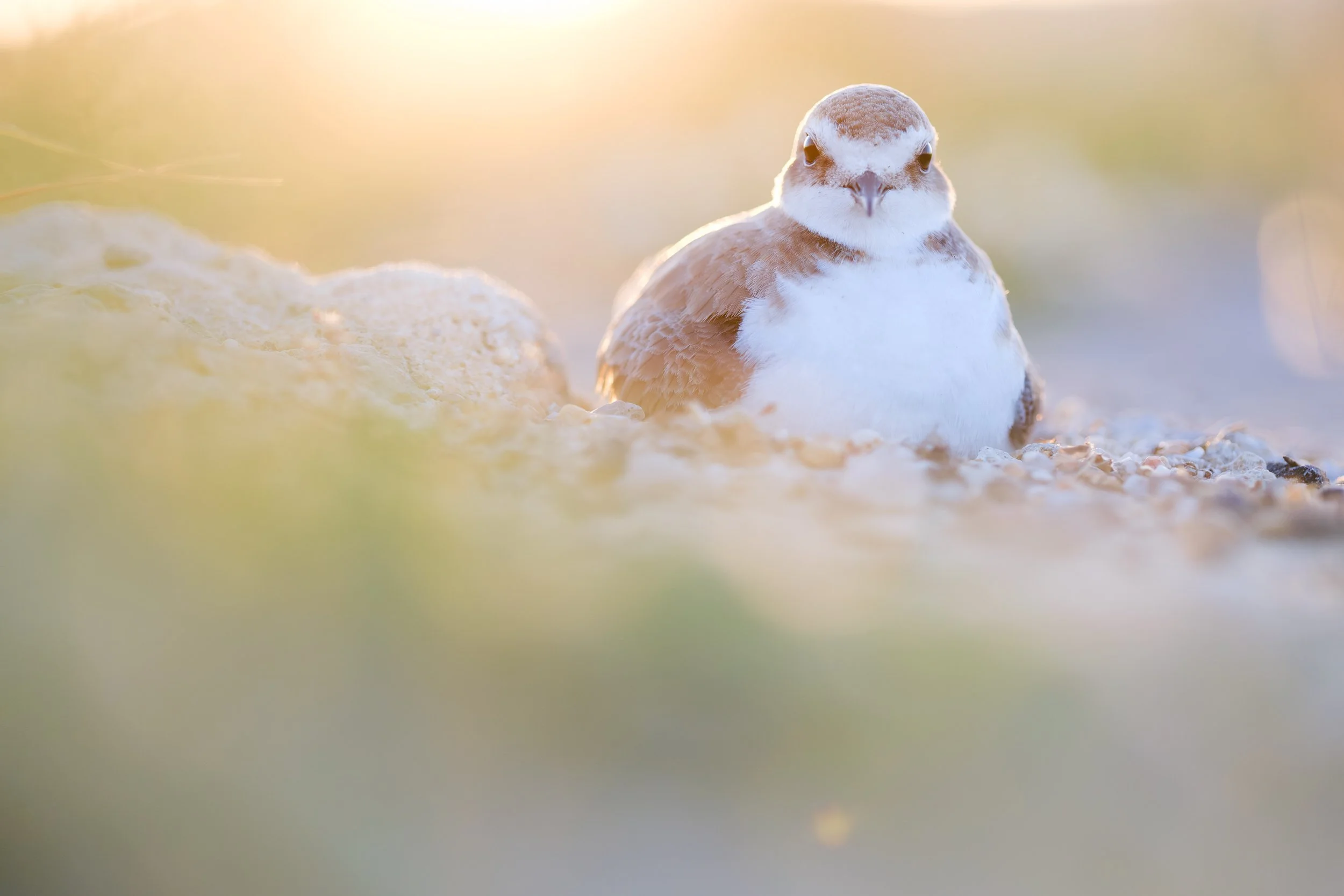
Dessa atenção nasceu o Frágil, uma coleção sem grandes pretensões, mas com uma intenção clara: mostrar o cuidado extremo que estas aves colocam em cada ninho, se é que lhe podemos chamar isso, em cada ovo, em cada momento de vida que ali começa.
Cnoncretamente, ao Borrelho-de-coleira-interrompida. O ninho é quase invisível. Uma pequena cova no solo, algumas vezes ladeada por fragmentos de conchas ou umas pedrinhas miúdas que ajudam tanto na camuflagem como a delimitar o ninho propriamente dito. Os ovos, por norma três, em boa verdade, nunca vi nem com menos nem com mais, são quase impossíveis de separar visualmente do terreno. Quem não sabe o que procura passa por eles sem dar por isso. É exatamente essa invisibilidade que lhes garante alguma margem de sobrevivência num ambiente tão exposto.
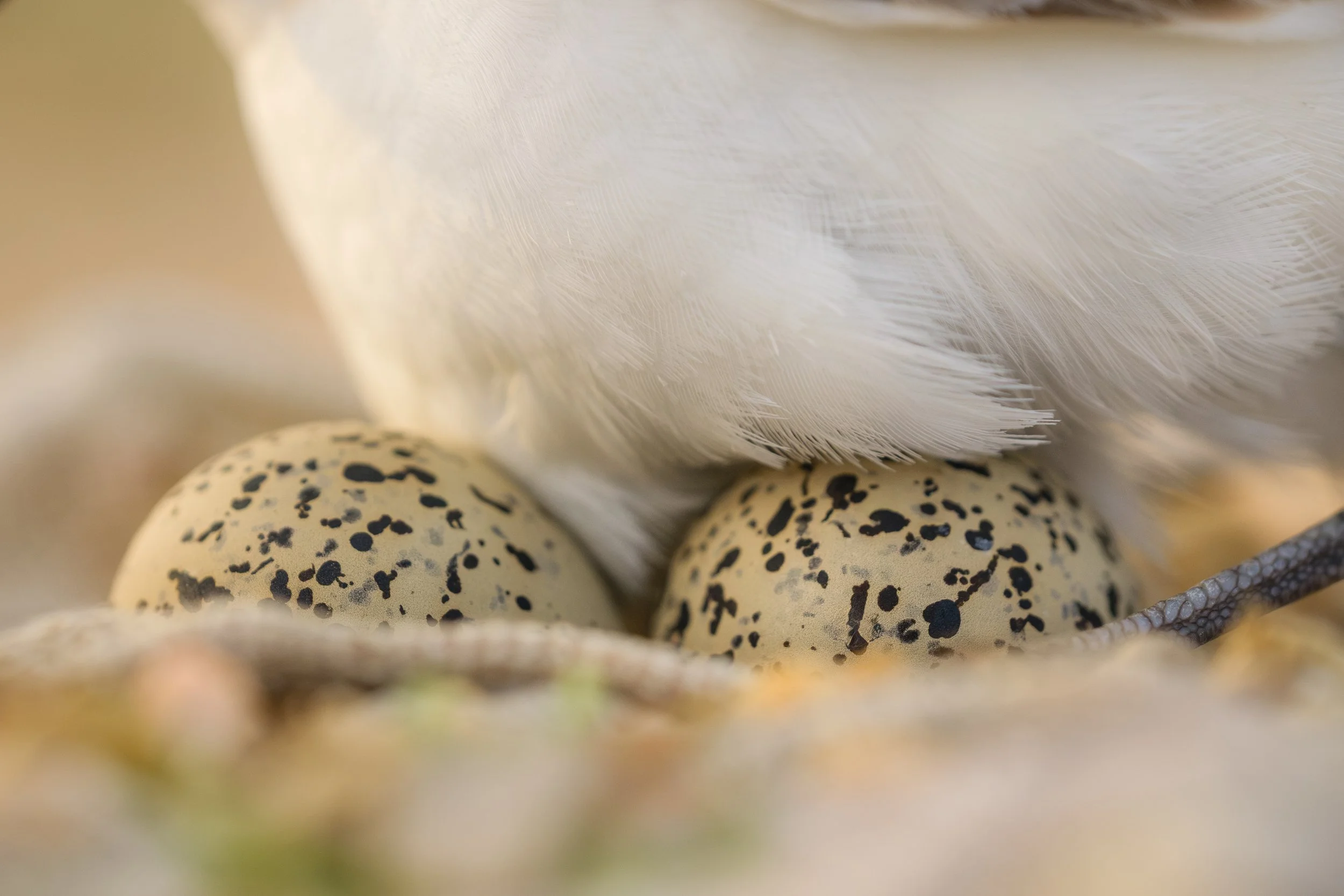
O que mais impressiona nesta espécie, mas nas chilretas também, quando se passa algum tempo a observá-las, é a dedicação com que ambos os progenitores protegem o ninho. O casal reveza-se na incubação ao longo de cerca de quatro semanas. O adulto em postura mantém-se imóvel durante longos períodos, confiante na sua própria camuflagem. Mas quando a ameaça se aproxima, a resposta muda, e é aí que a coisa fica verdadeiramente interessante. O adulto abandona o ninho de forma discreta e começa a fingir que está ferido. Arrasta uma asa pelo chão, baixa o corpo, hesita, expõe-se deliberadamente para atrair a atenção de quem se aproxima. É um teatro extraordinariamente convincente. A ave parece à beira do colapso, e é exatamente isso que pode salvar a ninhada: desviar o intruso para longe dos ovos enquanto o outro adulto vigia à distância.
Para quem está a fotografar e se depara com este comportamento, é também um aviso claro de que já chegamos longe demais. Fotografia de ninhos, o tema é controverso, bem sei, mas toda a fotografia de natureza, sem exceção, tem o seu impacto; no entanto, e neste caso concreto, se aproximarmos as câmaras uma ou duas vezes por dia, e desde que não se fotografe em dias com chuva ou mais frios que o habitual, o impacto, a meu ver, é mínimo. Não que me sirva de desculpa, mas julgo que a passagem das pessoas a passear os seus cães deve causar bem mais stresse.
Mas os borrelhos têm uma tolerância surpreendente à nossa presença, e podem instalar o ninho em zonas de forte afluência: bermas de caminhos, parques de estacionamento, acessos informais à praia. No fundo, os borrelhos não pedem muito, apenas espaço suficiente para fazer o que sempre fizeram, pôr três ovos e defender, com tudo o que têm, a hipótese frágil de uma nova geração.