Little dragons
In early June I was walking a stream somewhere out Pegões way. It's a narrow and rather charming stretch of water, bordered in places by farmland, where the ash and willow trees almost close over the sky and the water, by then, was already running slowly. Drive past and you'd never know it was there, which is a shame. Once you're in, a dark, shaded section will suddenly open out into a small clearing where the light comes through more strongly, and then the shade closes in again. Early in the morning you hear the water running and, over the top of it, all the chatter and song of the birds that live there.
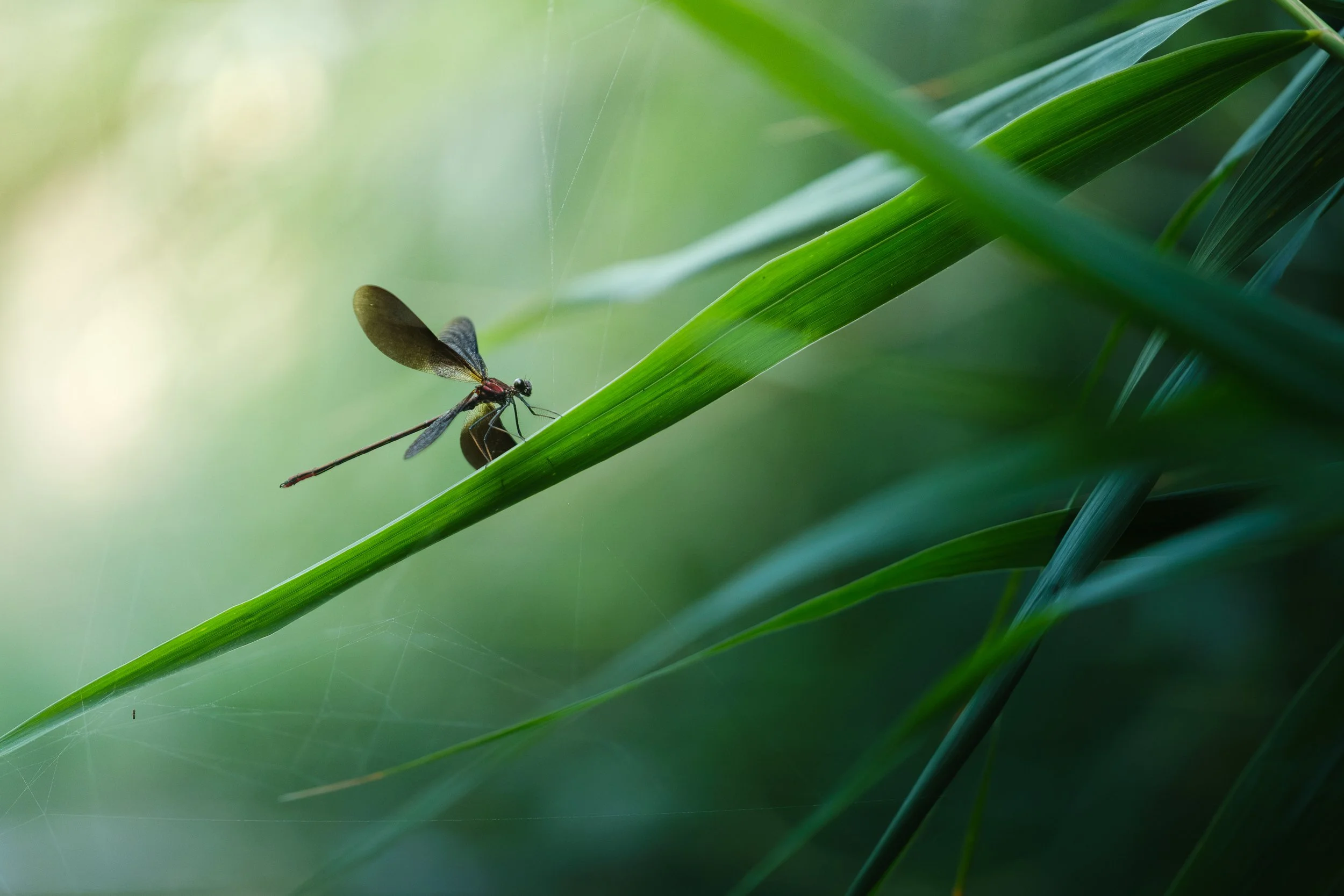
That's where I found the demoiselles. There were dozens of them perched on the reed stems, lifting off in short hops whenever I got close. From a distance, with that fluttering flight, you could almost mistake them for butterflies. Up close they're something else. The body has a metallic sheen and the tinted wings open and close slowly.
As far as I know, there are three species of this genus in Portugal. South of the Tagus the easiest to find is the Copper Demoiselle, Calopteryx haemorrhoidalis, whose male has dark wings and a deep pink underside to the abdomen. In the Western Demoiselle, Calopteryx xanthostoma, the male is metallic blue, with a dark patch running from the middle of the wing to the tip. The third, Calopteryx virgo meridionalis, is the southern subspecies of the Beautiful Demoiselle. It likes cold, well-oxygenated water and turns up mostly in the north and in the mountains.
They fly from roughly May to September, but May and June are the best months, because the streams still have water in them and numbers are at their peak. August is a different matter. By then many of these small watercourses have shrunk to stagnant pools, and the damselflies disappear as the pools dry up. If you want to look for them, choose shaded stretches of clean water with plenty of vegetation along the banks.
With them, as with so many other creatures, the temptation is to get as close as possible and take a sharp, side-on portrait, with the damselfly filling the frame. I can see why, and I respect people who photograph that way, but that kind of picture is good for identifying the species and not much else. After a few years you end up with dozens of identical photos, probably far more, and hardly one of them of any aesthetic interest, to me at least. Just as well there are so many styles of photography, otherwise it would all be a terrible bore.
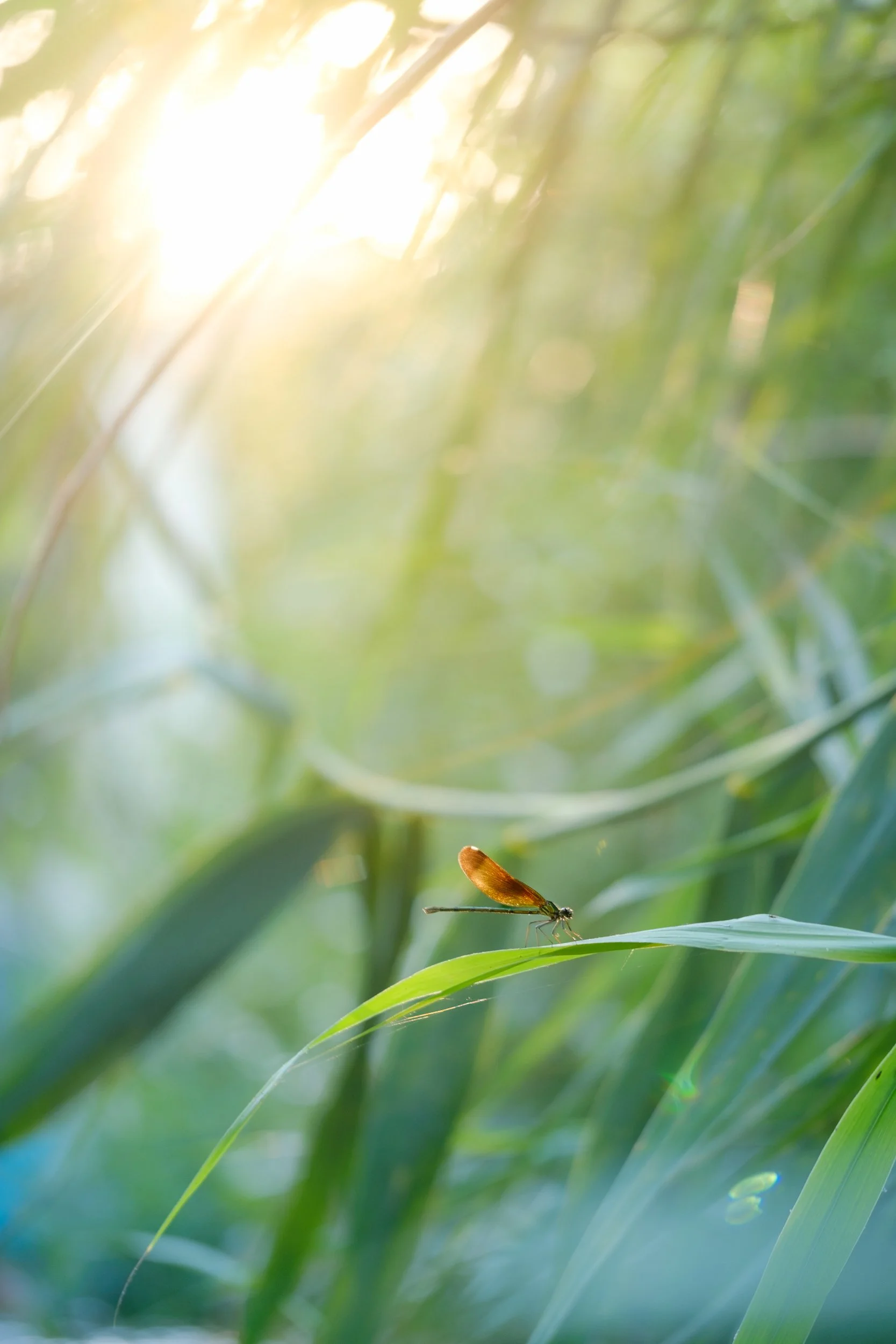
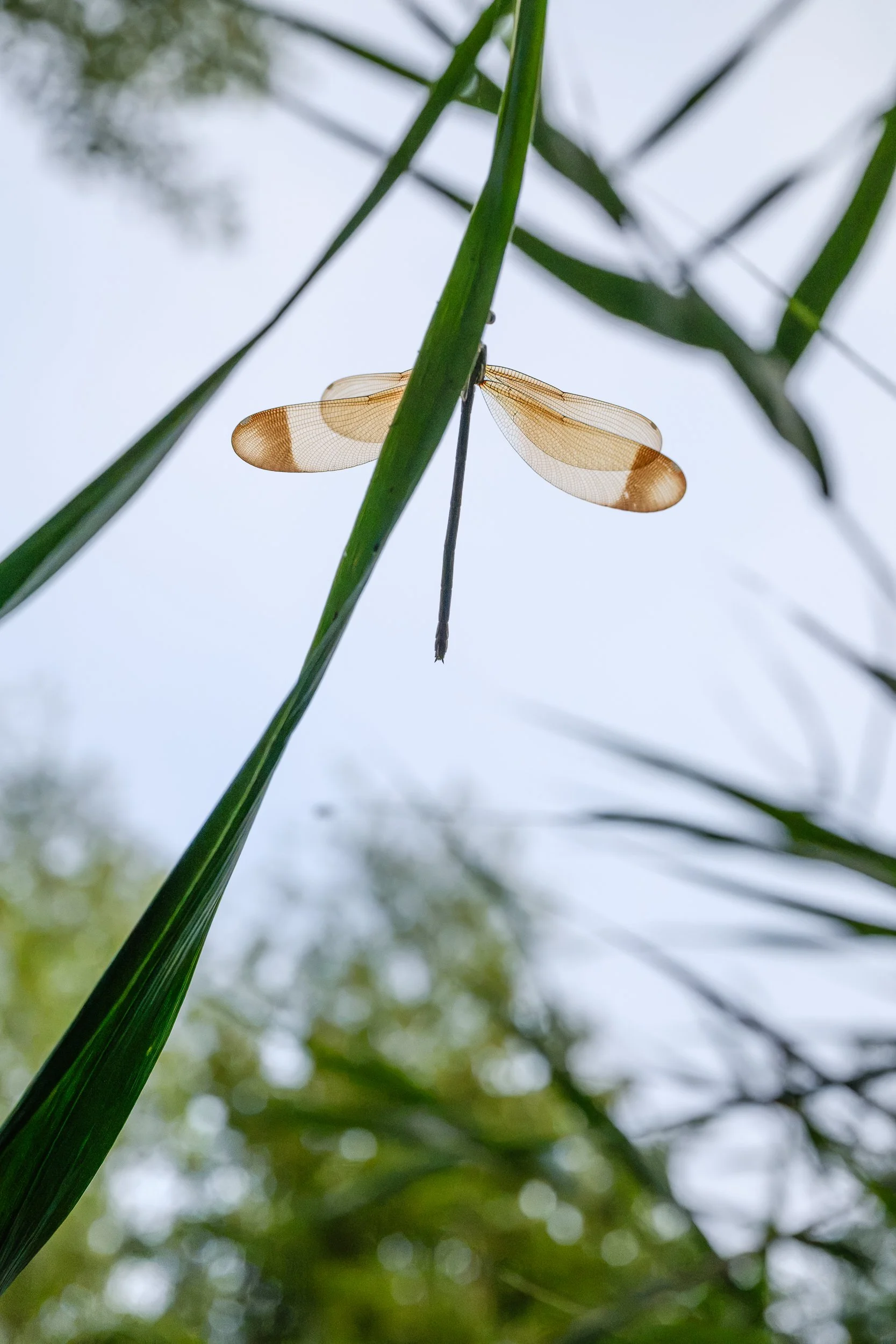
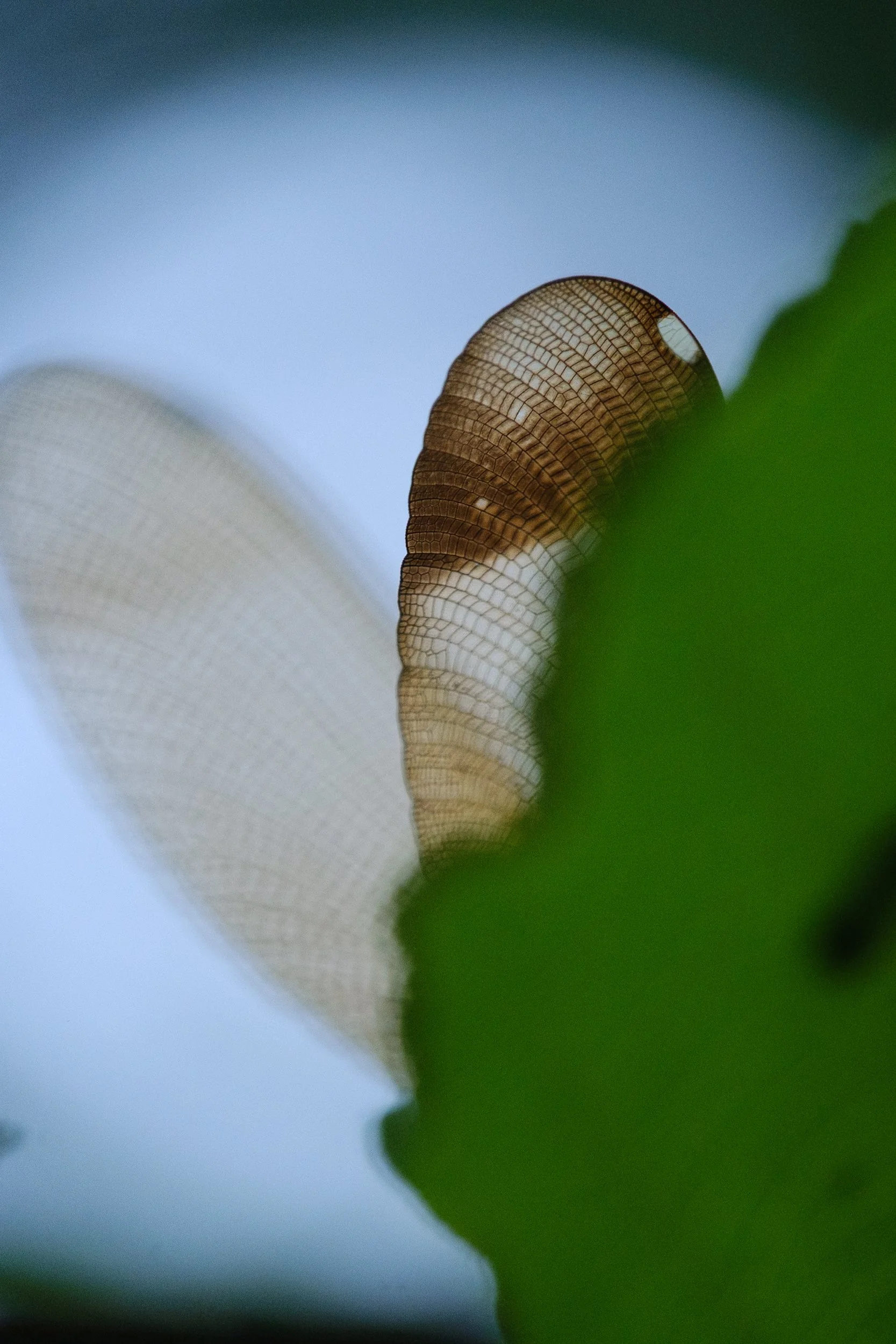
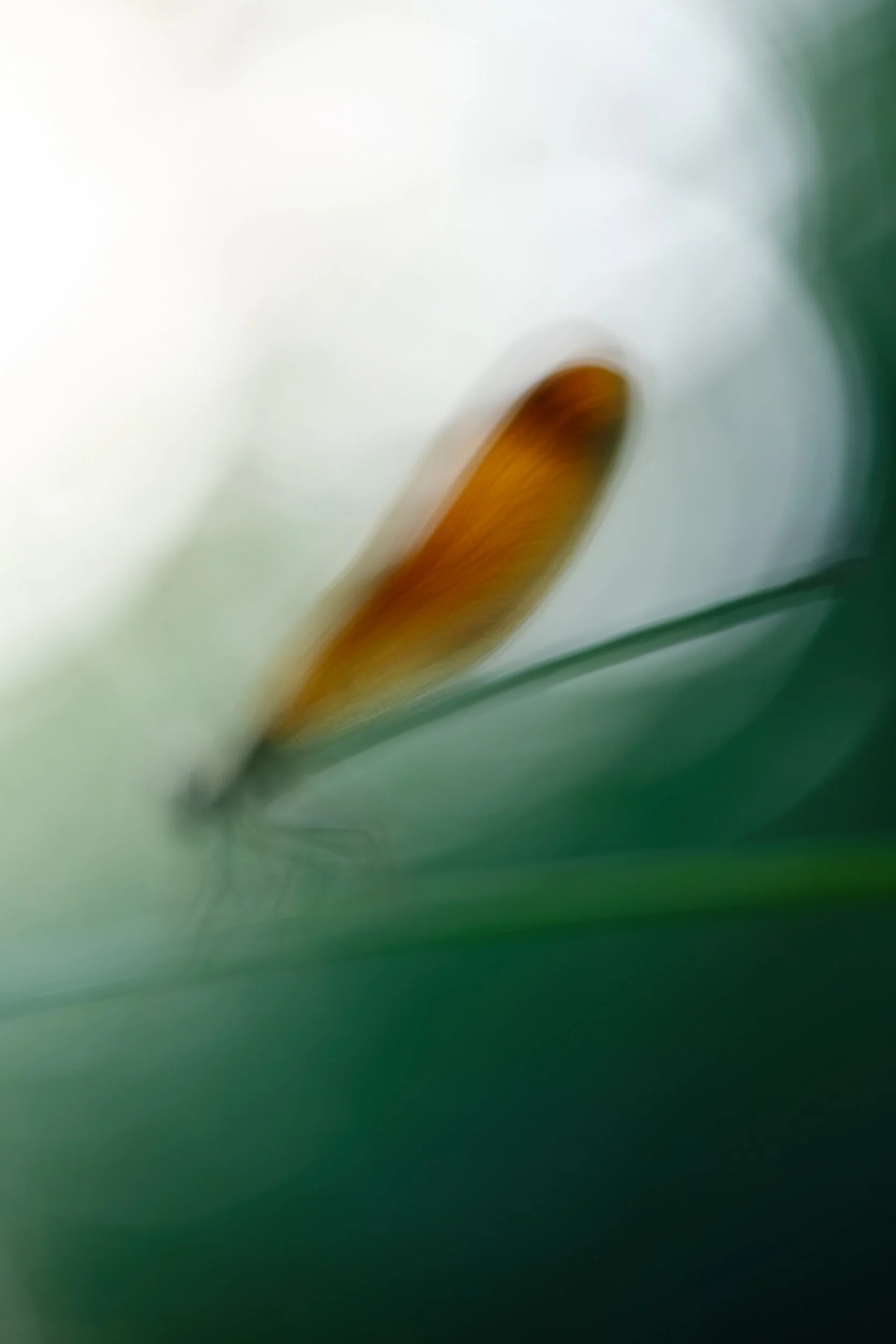
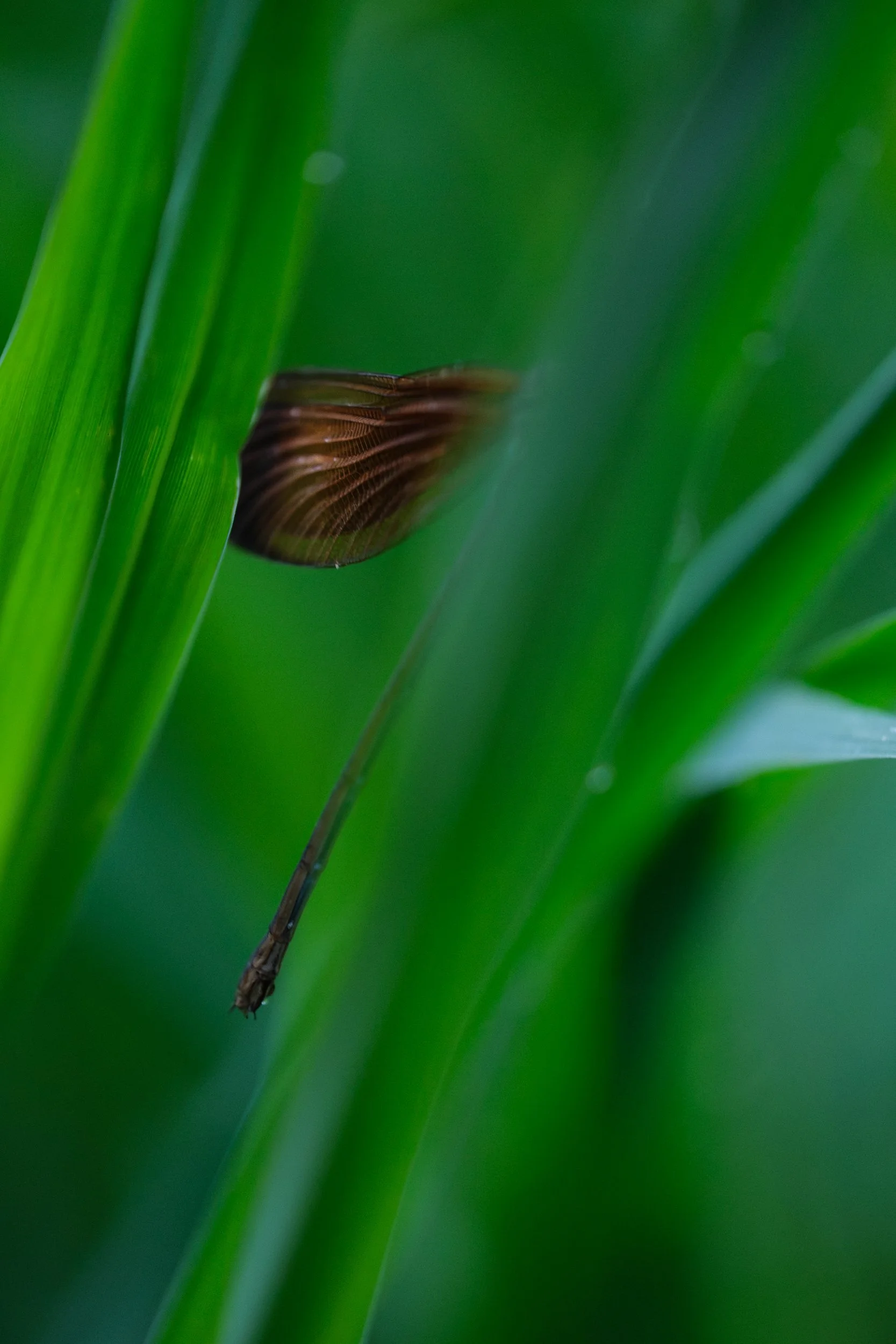
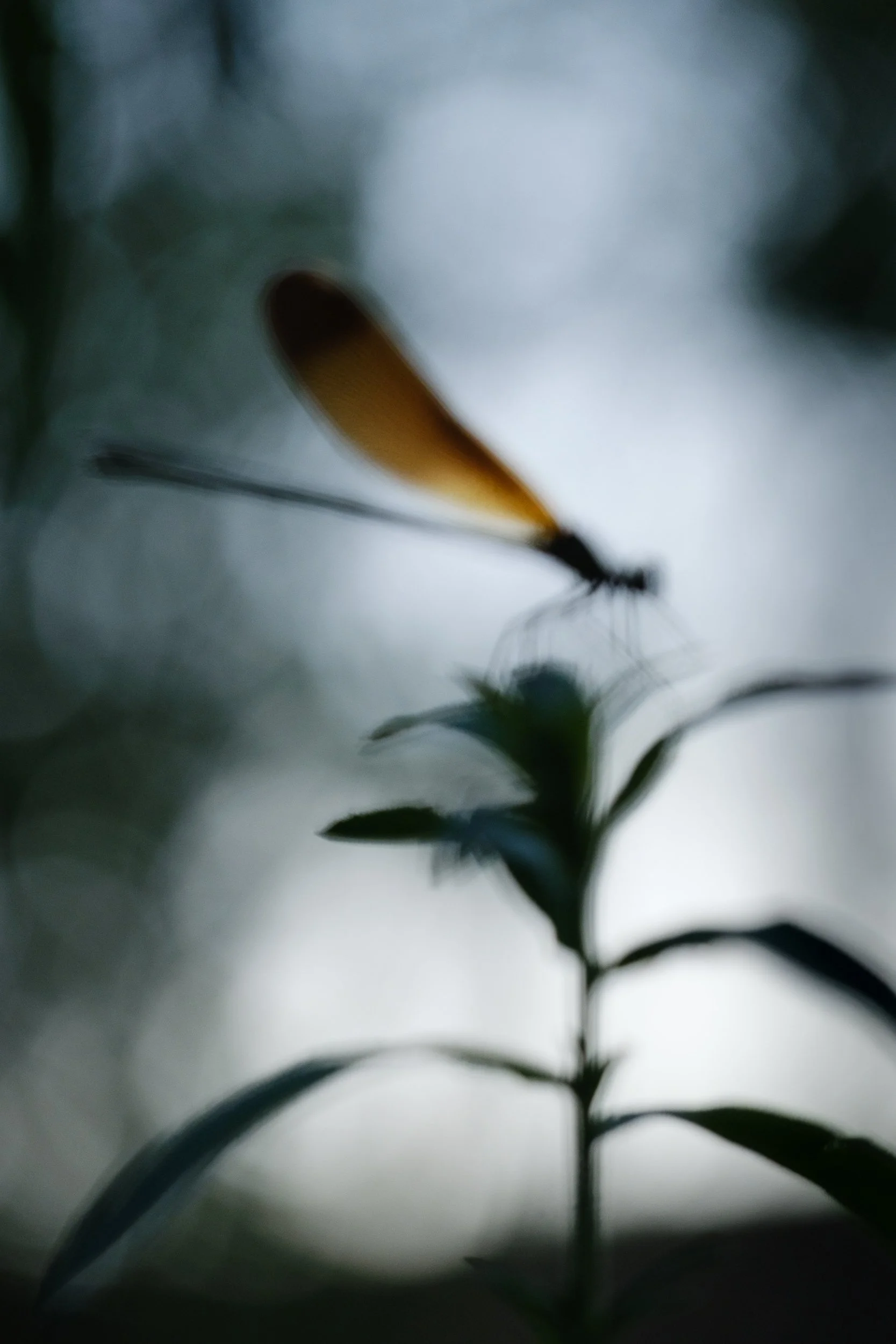
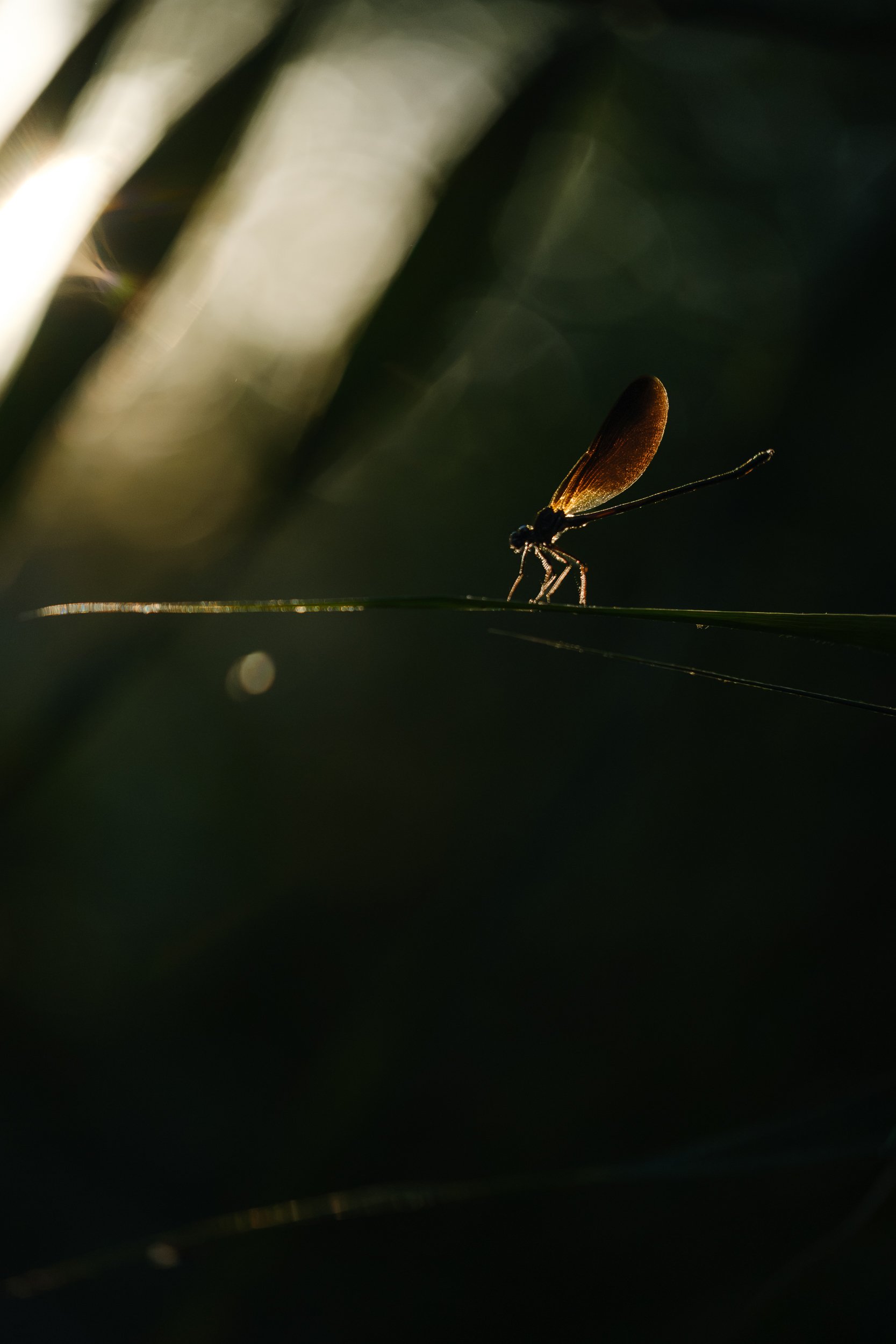
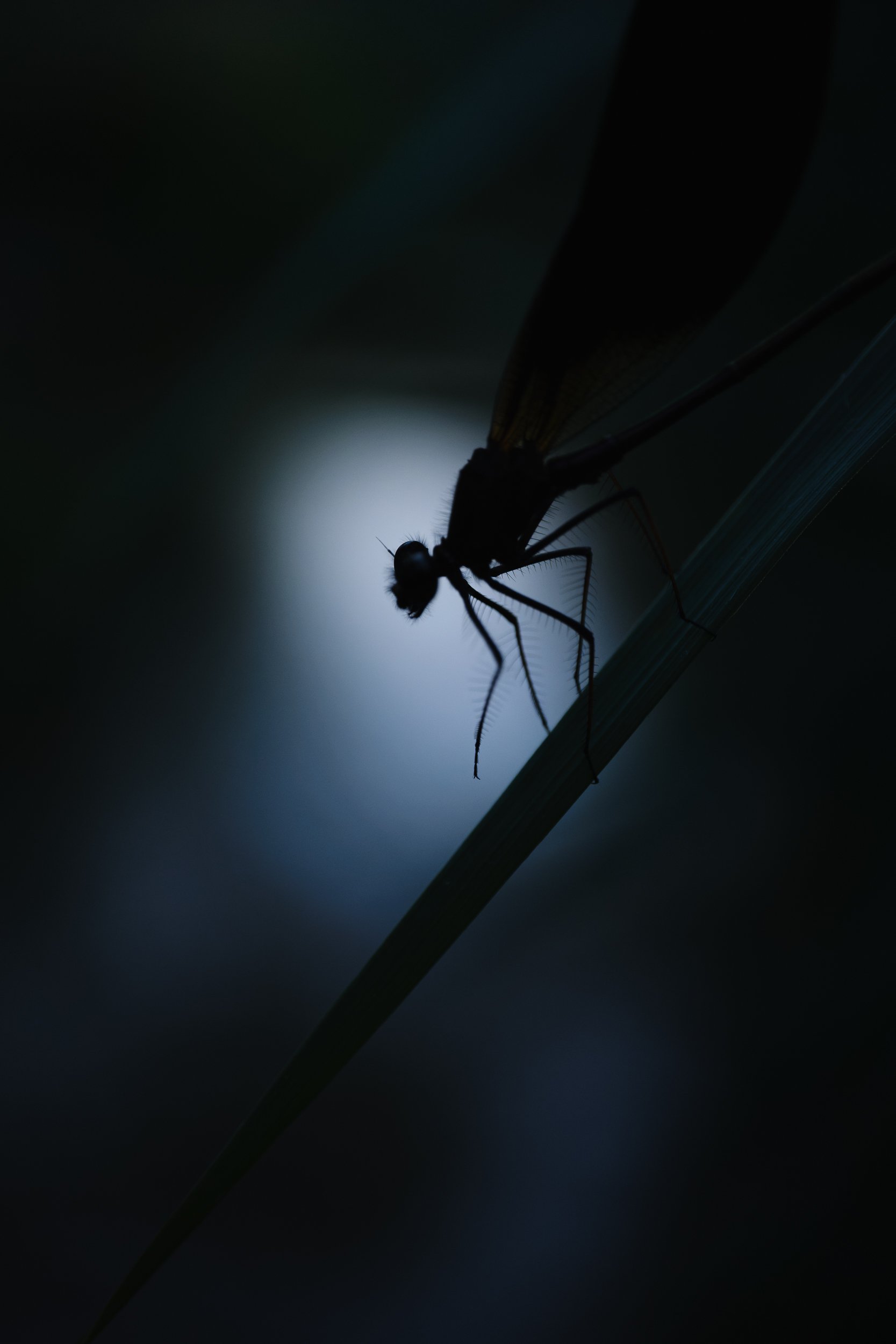
Without a doubt, the best time is first thing in the morning. The stream is quiet and, with the cooler temperature, they're less active, which helps. But what really gets me out there early is the light. With the sun still low, it comes in raking through the branches and is much softer. That's how I like to photograph them, with the light behind, shining through the wings, or with the reflection on the water bringing colour into the scene. Sometimes I leave the animal small in the frame, other times I keep just a detail, a wing or a section of the abdomen. Letting part of the picture go soft makes sense to me too.
The demoiselles weren't the only ones I saw along that stream, far from it, but they were the most numerous. There were also Scarce Emerald Damselflies, the odd Black-tailed Skimmer, Iberian Bluetails, a few emperors and one enormous Golden-ringed Dragonfly. And there was one that gave me the slip twice, so I never got a single photo to identify it. Still, as they say, there's always next year.
No início de junho andei por uma ribeira lá para os lados de Pegões. É um troço de água estreito e engraçado, ladeado em vários locais por terrenos agrícolas, onde os freixos e os salgueiros quase fecham o céu e a água, naquela altura, já corria devagar. Quem passa de carro nem dá por ela, o que provavelmente seja bom. Lá dentro há zonas escuras que de repente se abrem numa pequena clareira, onde a luz entra com mais vigor, e logo a seguir volta a sombra. De manhã cedo ouvimos a água a correr e, por cima dela, toda a parafernália de sons das aves que por ali habitam.
Foi aí que encontrei as Calopteryx. Estavam às dezenas, pousadas nas hastes dos caniços, e levantavam voo em saltos curtos sempre que eu me aproximava. Ao longe, pela forma como batem as asas, quase se confundem com borboletas. De perto são outra coisa. O corpo tem um brilho metálico e as asas pigmentadas abrem e fecham devagar.
Pelo que sei, há três espécies deste género em Portugal. A sul do Tejo, a mais fácil de ver é a Calopteryx haemorrhoidalis, cujo macho tem as asas escuras e a parte de baixo do abdómen de um rosa intenso. Na Calopteryx xanthostoma o macho é azul metálico, com uma mancha escura que vai do meio da asa até à ponta. A terceira, a Calopteryx virgo meridionalis, gosta de águas frias e bem oxigenadas e aparece sobretudo no norte e nas serras.
Voam mais ou menos de maio a setembro, mas maio e junho são os melhores meses, porque as ribeiras ainda levam água e as populações estão no auge. Em agosto já é diferente. Muitos destes pequenos cursos de água ficam reduzidos a poças paradas e as libelinhas desaparecem à medida que as poças secam. Quem as quiser procurar deve escolher troços sombreados de água limpa, com bastante vegetação nas margens.
Com elas, como com tantos outros bichos, a tentação é chegar o mais perto possível e fazer o retrato de perfil, bem nítido, com a libelinha a encher o enquadramento. Percebo porquê e respeito quem fotografa assim, mas esse tipo de imagem serve para identificar a espécie e pouco mais. Ao fim de uns anos temos dezenas de fotografias iguais, se calhar muitas mais, e quase nenhuma com interesse estético, pelo menos para mim. Ainda bem que existe tanta variedade de estilos fotográficos, caso contrário seria uma grande chatice.
As melhores horas são, sem dúvida, as primeiras da manhã. A ribeira está sossegada e, com a temperatura mais fresca, elas estão menos ativas, o que ajuda. Mas o que me leva lá cedo é sobretudo a luz. Com o sol ainda baixo, entra rasante por entre os ramos e é muito mais suave. Gosto de as fotografar assim, com a luz a atravessar a asa em contraluz ou com o reflexo na água a dar cor à cena. Às vezes deixo o animal pequeno no enquadramento, outras vezes fico só com um pormenor, uma asa ou um pedaço do abdómen. Aceitar que parte da imagem fique desfocada também me faz sentido.
As Calopteryx não foram as únicas que vi naquela ribeira, longe disso, mas eram as mais abundantes. Apareceram também Lestes dryas, uma ou outra Orthetrum cancellatum, Ischnura graellsii, alguns Anax e uma Cordulegaster boltonii enorme. Houve ainda uma que me fugiu duas vezes e de que não consegui nem uma fotografia para a identificar. Bom, como se costuma dizer, para o ano há mais.