In no hurry
By the time autumn comes round, when the first rains ought to be arriving and the nights have at least turned cooler and damper, the orchid season feels long over. The Ophrys, the Cephalanthera and all the rest that grow round here flowered back in spring, then withered and vanished into grass already scorched by the summer. And yet this is exactly when autumn lady's-tresses, Spiranthes spiralis, puts in an appearance. It is the last orchid of the year to flower in Portugal, turning up between September and November. It isn't a rare plant, but it has managed to give me the slip for years, whether because I was ‘busy’ with something else or, quite simply, because I was looking in the wrong place.
What strikes me most about this species is time. Yes, time. The seed can't germinate without a fungus, and spends around eight years underground with no leaves at all, fed through that partnership. The first leaves appear at around ten years, and the first flower doesn't come until thirteen or fourteen. Even then, a mature plant won't necessarily flower every year. For all I know, I've been looking in the right places all along and they simply chose not to show themselves.
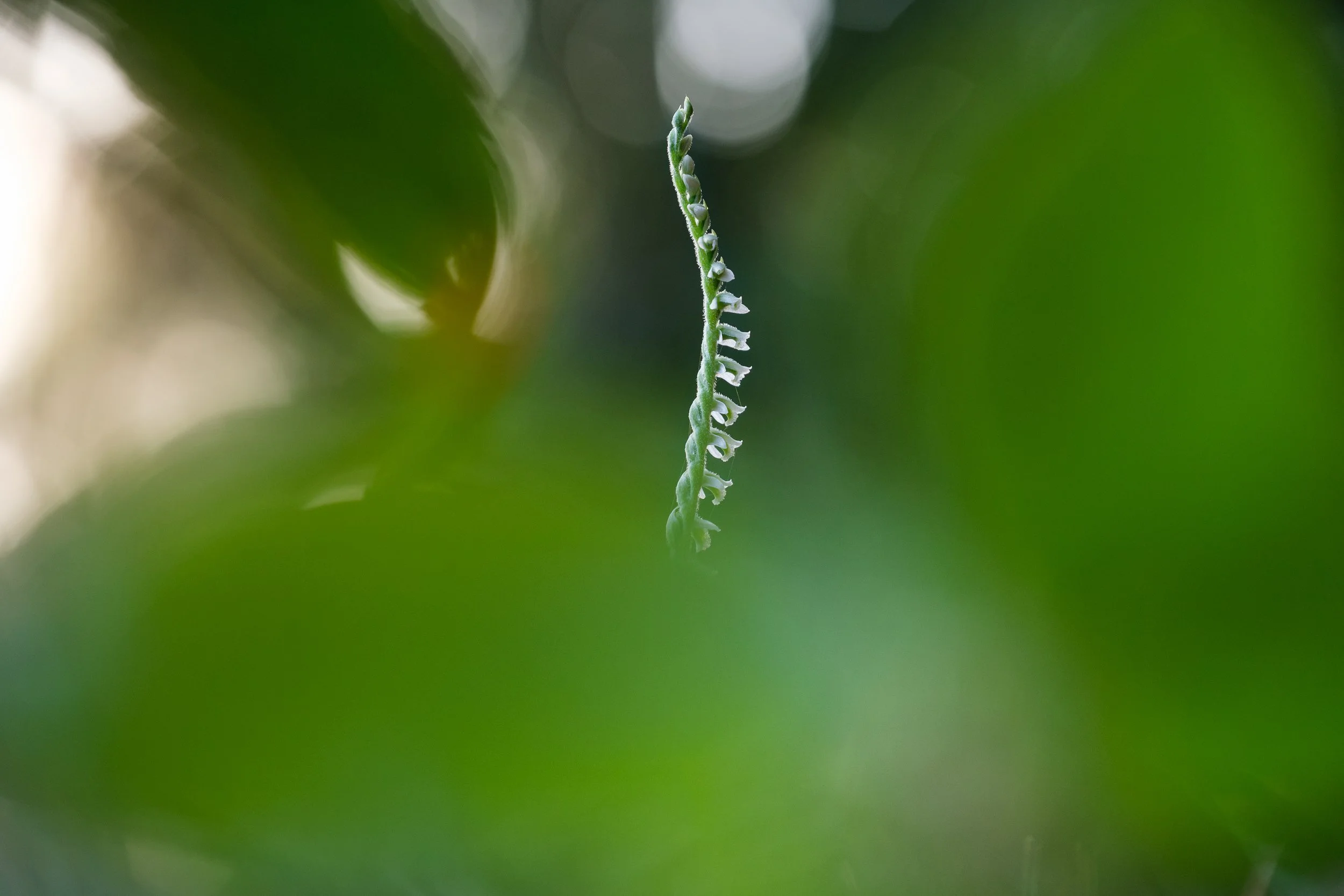
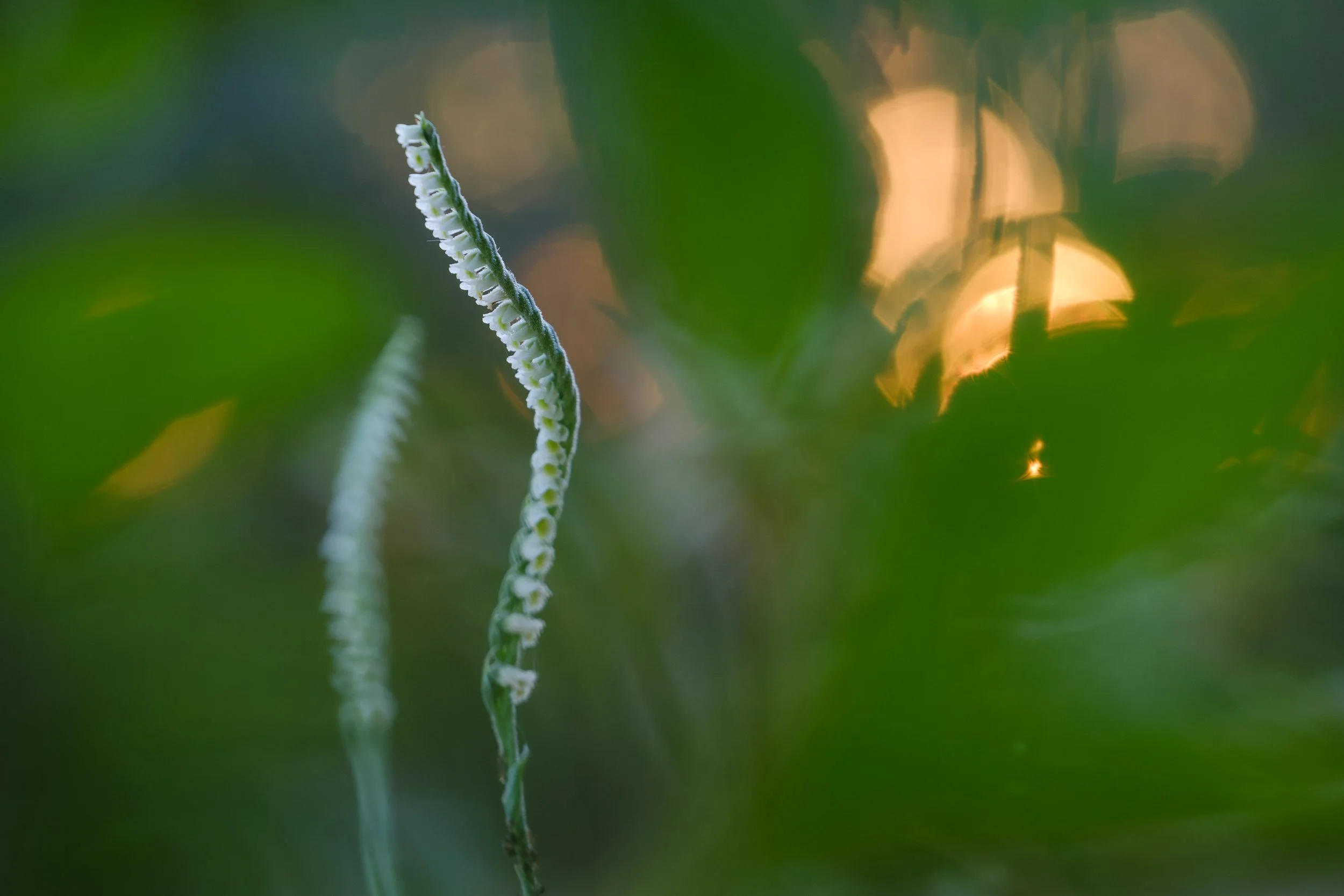
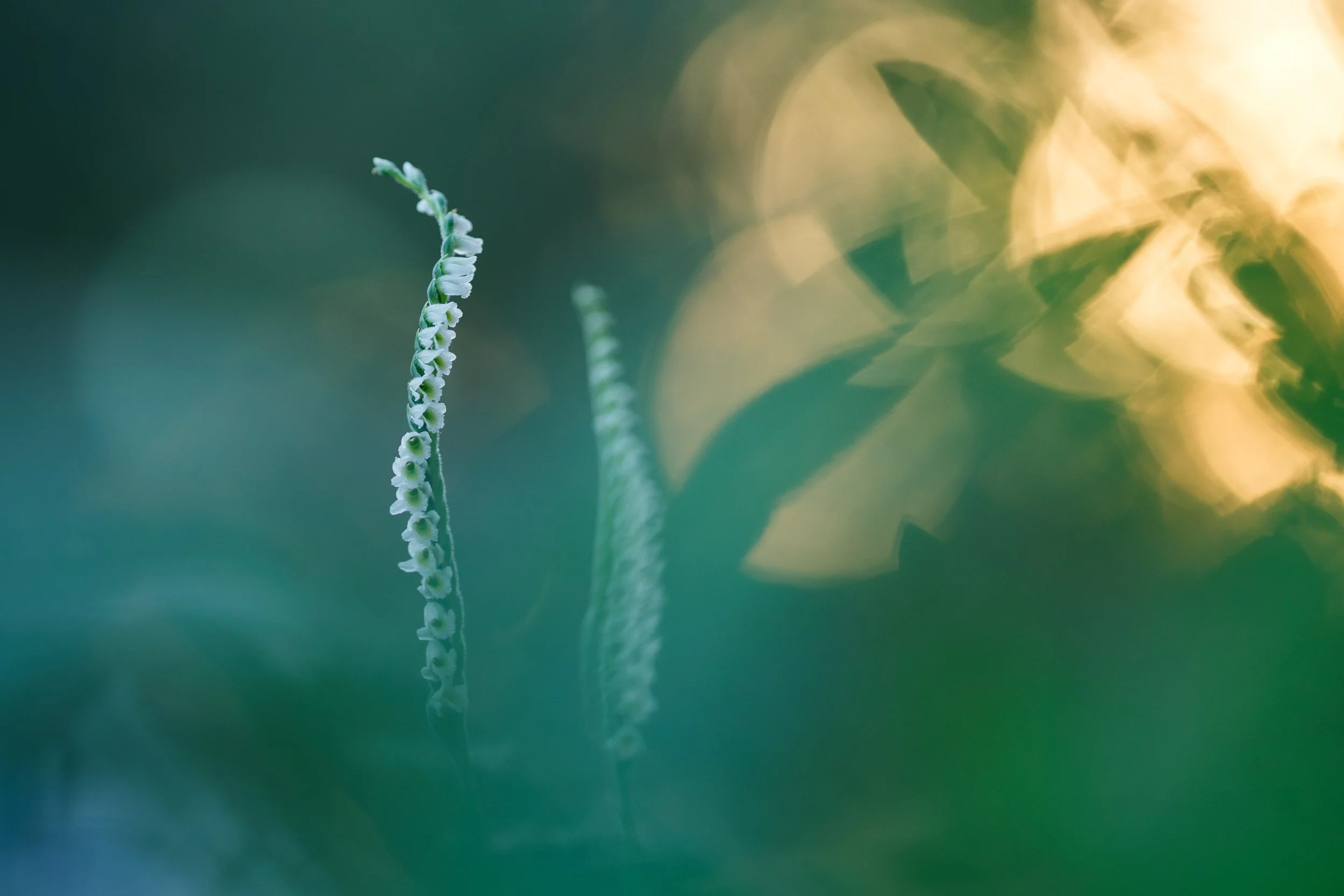
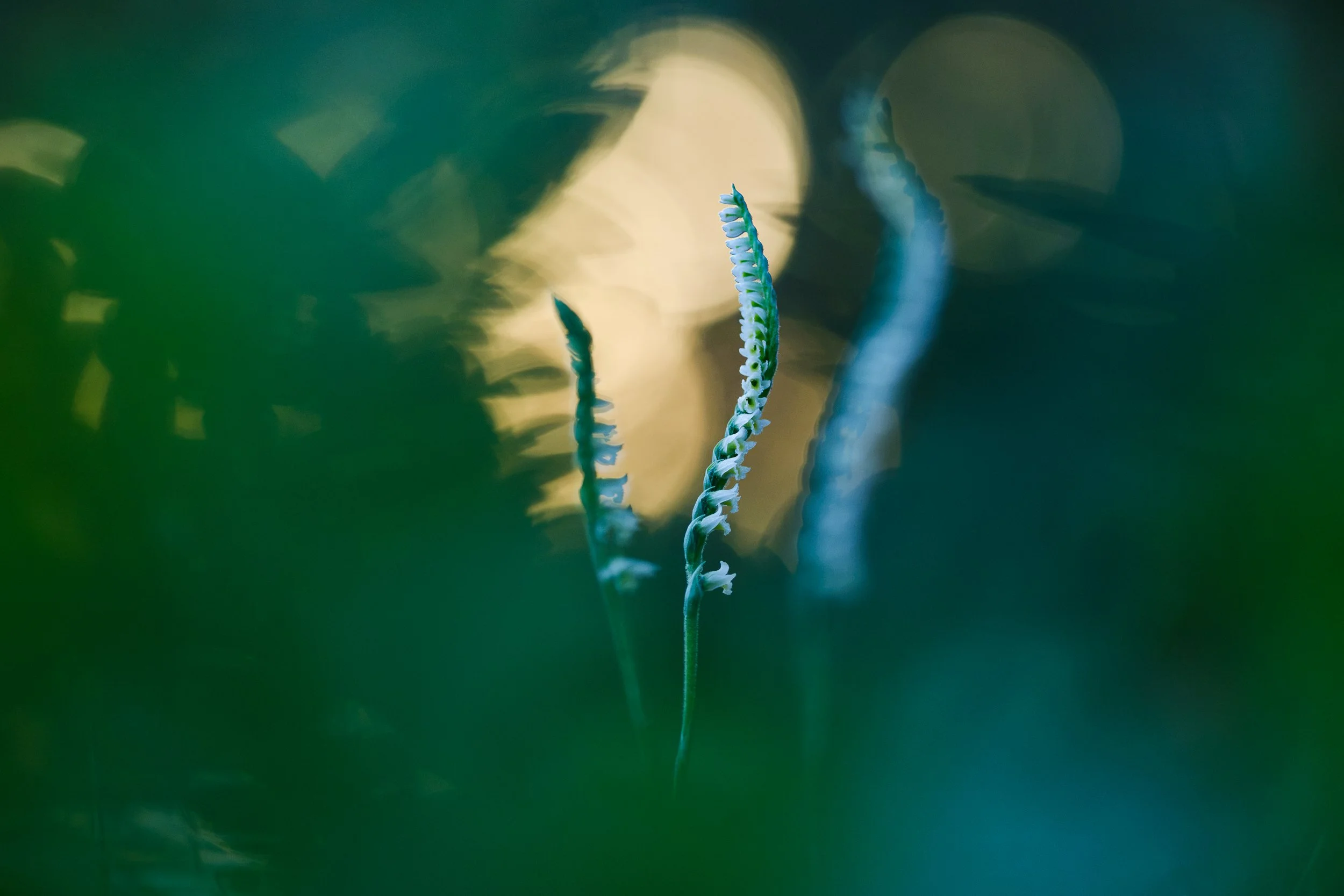
It favours open ground with little shade, such as meadows and clearings in low scrub, which makes life a good deal easier for anyone out looking for it, whether simply to see it or, like me, to photograph it too. It's a discreet little plant. The flowers are white and only a few millimetres across, and they wind up the stem in a single spiralling row. They open from the bottom upwards and are visited mostly by bumblebees.
One of these days I really must write a fuller piece here on the wild orchids I've been photographing, fairly methodically, over the years, mostly in one corner of Portugal, the Arrábida Natural Park and the six ranges of hills that make it up. It's a varied patch, with around 30 species and some rather curious hybrids.
Photographing Spiranthes means slowing down, though to be fair that's true of all of them. Sitting on the ground, level with the spiral, I get a better feel for the plant's scale and the space around it. The straightforward record shot has its place, and I recognise its value when the aim is to show the species as accurately as possible, but it's clearly not my style. I still take them whenever I can, for exactly that reason, but they aren't the pictures I value most. What I look for is the soft, low light of early morning, and I pay close attention to backgrounds, simple or a little busier, so that the white line of the spiral stands out, wholly or in part, from the vegetation around it. I want the picture to say as much about the place and the season as about the orchid. It may sound like a stock phrase, a cliché even, but a plant that takes more than a decade to flower deserves an unhurried look.
Quando o outono chega e deviam cair as primeiras chuvas, pelo menos as noites já estão mais frescas e húmidas, o calendário das orquídeas parece já ter sido encerrado faz muito. As Ophrys, as Cephalanthera e todas as outras que por aí andam floriram na primavera, secaram e desapareceram por entre o pasto que o verão secou. No entanto, é nesta altura que surge a Spiranthes spiralis, a última orquídea do ano a florir em Portugal. Aparece entre setembro e novembro. Apesar de não ser rara, tem-me escapado ao longo dos anos, quer por andar “ocupado” com outra coisa qualquer, quer porque, pura e simplesmente, andei à procura no sítio errado.
O que mais me chama a atenção nesta espécie é o tempo, sim, o tempo. A semente precisa de um fungo para germinar e passa cerca de oito anos no solo, sem folhas, alimentada por essa associação. As primeiras folhas aparecem por volta do décimo ano e a primeira flor só chega ao fim de treze ou catorze. Mesmo depois, uma planta adulta não floresce todos os anos. Vai na volta, até andei à procura nos sítios certos e elas é que não se deram a ver.
Prefere terrenos abertos e com pouca sombra, como prados e clareiras com mato baixo, o que facilita muito a vida não só a quem a procura para a ver, mas também a quem, como eu, a quer fotografar. É uma planta discreta, pequenina. As flores, brancas e com poucos milímetros, sobem numa única fila em espiral à volta do caule. Abrem de baixo para cima e são visitadas sobretudo por abelhões.
Um dia destes tenho de escrever aqui um artigo mais completo sobre as diferentes espécies de orquídeas silvestres que, ao longo dos anos, tenho vindo a fotografar com alguma disciplina, principalmente numa zona específica de Portugal, o Parque Natural da Arrábida e as seis serras que o compõem. É um território diverso, com cerca de 30 espécies de orquídeas e alguns híbridos bastante curiosos.
Fotografar a Spiranthes obriga a andar devagar, em boa verdade, como todas as outras. Sentado no chão, ao nível da espiral, percebo melhor a escala da planta e o espaço à sua volta. A fotografia de mero registo tem o seu lugar. Reconheço a sua importância quando o objetivo é representar a espécie da forma mais rigorosamente possível, mas claramente não é o meu estilo. Ainda assim, faço-o sempre que possível com esse mesmo propósito, mas não são essas as imagens que mais valorizo. Procuro a luz suave e baixa do início do dia e dou importância aos fundos, sejam eles simples ou um pouco mais complexos, de modo que a linha branca da espiral se destaque, total ou parcialmente, por entre a vegetação. Quero que a imagem fale do lugar e da estação tanto quanto da orquídea. Pode parecer uma frase feita ou até um cliché, mas uma planta que leva mais de uma década a florir merece um olhar sem pressa.