The Night Bird
With plumage that blends into the ground, silent flight and eyes that cut through the dark, the nightjar was made for the night. Even so, it is one of those species you come to know by ear first. For a long time it was no more than that to me, a long sound, with an almost industrial quality to it, that starts up after sunset.
The male's song is a continuous churr, given from the top of a tree or from the post of some fence or other, a sound that can carry on for a good while. From what I have read, there are references to around one thousand nine hundred notes per minute. In practice, that sound is what tells us the bird is about, because actually seeing it, well, that is another matter. I am leaving here the recording of a nightjar I captured one of these nights. With no real audio editing, not least because I would not know how, you can hear in the same take the song and the call of a second nightjar, slightly further off.
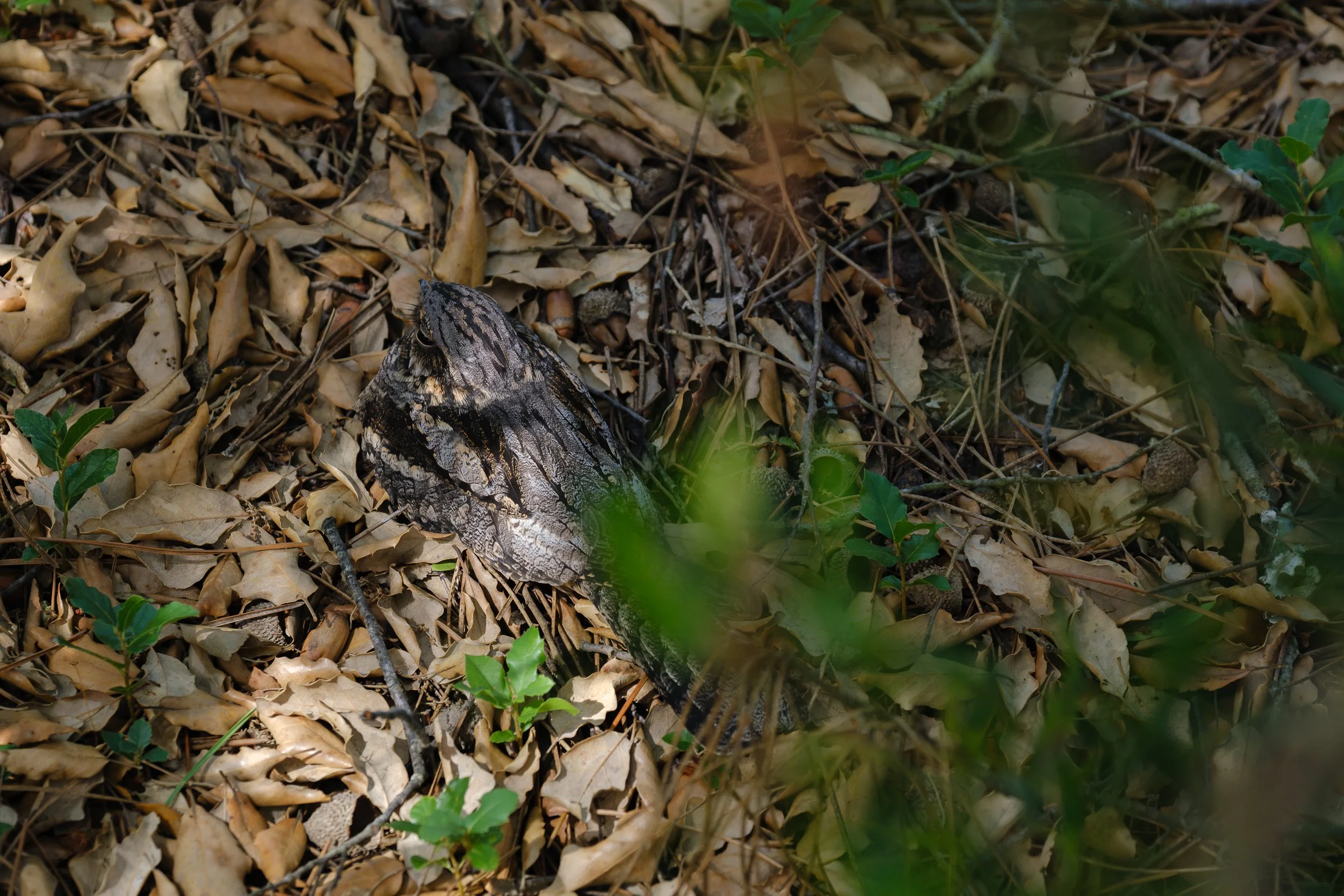
Camouflage is the central piece of this bird's life and it explains almost everything else. The grey plumage, streaked and flecked with brown, carries a fine pattern that mimics bark and the dead leaves lying on the ground; the intended effect is to break up the outline of the body. During the day the nightjar rests on the ground, among leaf litter and pine needles, or perched along a branch in line with its own body and never across it, precisely so as not to create a recognisable silhouette.
The bird trusts its camouflage to the very limit. A nightjar on the ground will let you come within a few metres and only takes flight when it works out that it has already been seen. It works so well that it has happened to me time and time again, I have been certain I was looking at what I took to be a nightjar and only afterwards, through binoculars, realised it was a pine cone. Some years ago a man who was already not that young at the time, a cork stripper, one of those people whose knowledge of the land puts most of us to shame, taught me to read the ground and to look in the right places. Almost everything I know about finding nightjars comes from what was passed on to me then. By day I look for them mainly in areas of cork oaks with low, broad crowns and little ground vegetation. It does not have to be cork oak, I have found them under eucalyptus and in pine woods as well. At night I go by sound until I can make out the silhouette among the branches.
They hunt at dusk and through the night, in low, silent flight, after moths and other insects. The moon counts for a good deal in this routine, on full-moon nights they sing and fly far more than on dark nights, and again from what I have read, laying appears to be timed so that the rearing of the young falls in the brightest period, when there are more insects within reach.
The names tell another story. In Portuguese, noitibó comes from the Latin noctivola, that is, the one that flies by night, and it leaves it at that. The scientific name, on the other hand, is more imaginative. Caprimulgus means goat-milker, and it has its origin in a belief recorded by Aristotle, that these birds came to the flocks at night to suckle from the goats and dry up their milk, with some swearing that the goats went blind into the bargain. The idea crossed Europe more or less intact, chotacabras in Spanish, goatsucker in English. Nightjars really were above the livestock, but after the insects the animals put up, and the rest of the story was built out of the outsized mouth, the silent flight and the habit of turning up at the hour when people go looking for someone to blame. In England they went as far as lich fowl, corpse bird, and the belief that the souls of unbaptised children went about in the shape of a nightjar. We really do have a fertile imagination.
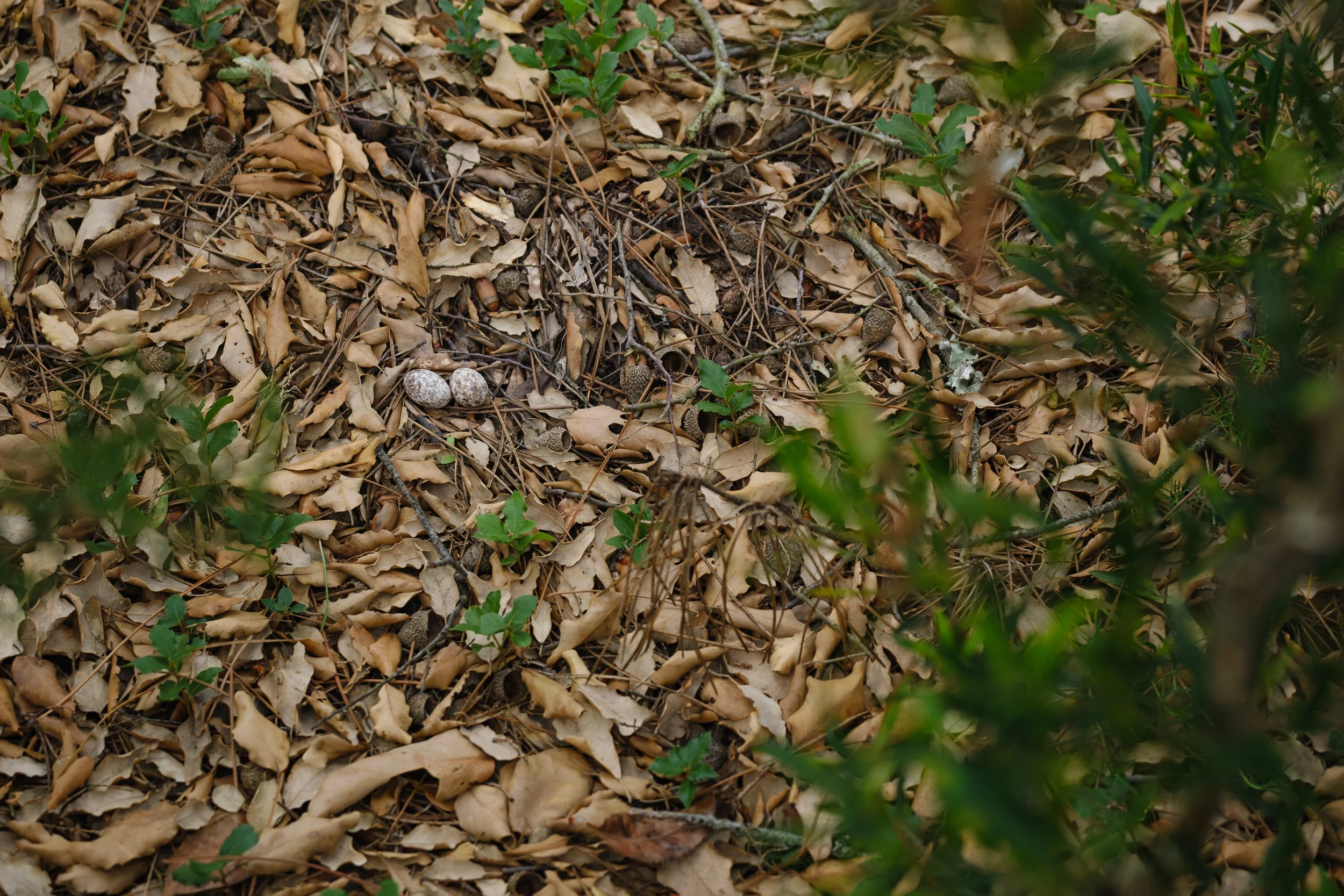
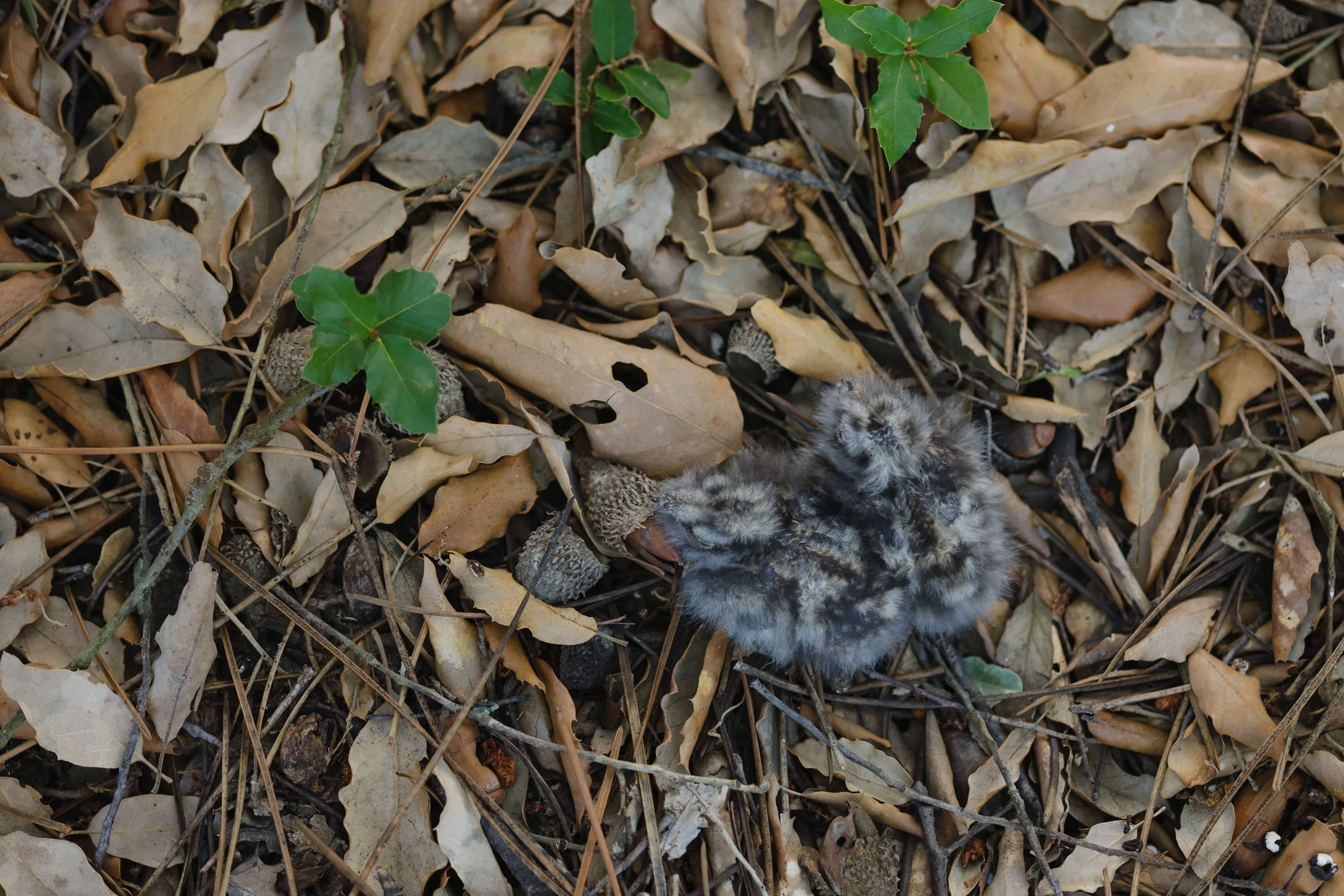
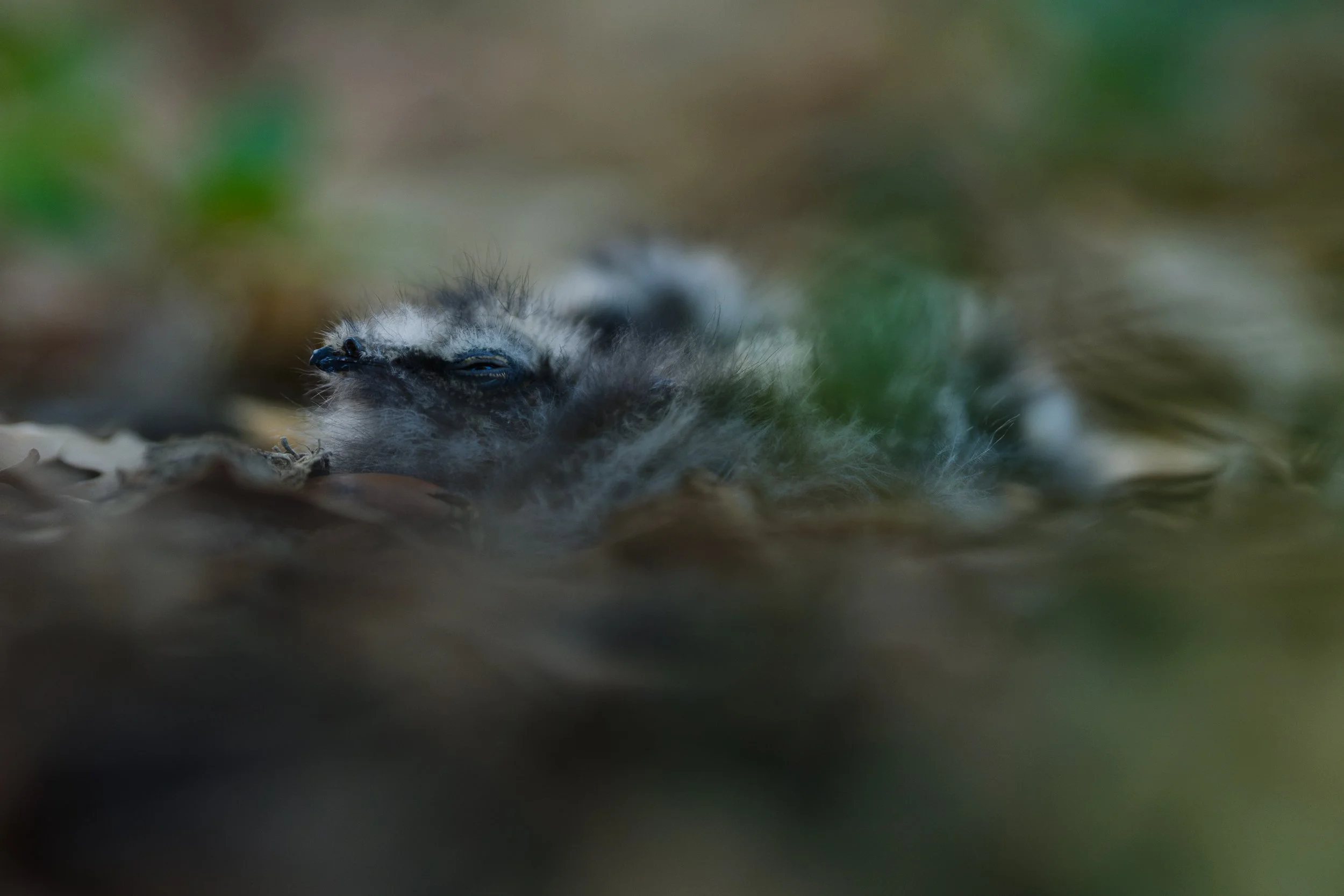
A nest, as such, does not exist, and here the camouflage works on its own. The female lays two eggs straight onto the ground, in the slightest of scrapes among the leaf litter, whitish eggs marbled with grey. She incubates them for around eighteen days with nothing to protect her beyond her own plumage, and the chicks hatch already wearing the same pattern. Faced with someone approaching, she stays perfectly still until the last moment, which is impressive to witness and is, at the same time, her greatest weakness. A loose dog in the wrong place can end a nesting attempt in one go, and I am leaving out foxes and all the other natural predators, because there it is simply nature doing its work.
The Red List of the Birds of Mainland Portugal classifies the European Nightjar as Vulnerable, and the reasons are the ones that are becoming familiar in so many other cases. Forestry stands that are ever more closed in, most likely abandoned and consequently unmanaged, clearings and marginal ground that tend to disappear, and the general decline in insect numbers. There is also mortality on roads and dirt tracks, where nightjars settle at the end of the day to make the most of the heat the ground still holds.
Photographing them forced me to adapt my approach. For some of the images I used cameras triggered remotely, left in place and fired from a distance, and the results are uneven. The shutter does not fail, the framing does, because the birds never land exactly where we picture them. I know the subject is debatable, as almost everything is in this field, and the only rule I follow is a simple one, if the behaviour changes because of my presence, the problem is mine and it is time to leave.
Com uma plumagem que se confunde com o chão, um voo silencioso e olhos que perfuram a escuridão, o noitibó foi feito para a noite. Ainda assim, é uma daquelas espécies que se conhecem primeiro pelo ouvido. Durante muito tempo foi só isso para mim, um som longo, com uma sonoridade quase industrial, que começa a ouvir-se depois do pôr do sol.
O canto do macho é um trinado contínuo, emitido do alto de uma árvore ou de um poste de uma qualquer vedação, um som que pode prolongar-se durante bastante tempo. Pelo que pesquisei, há referências a cerca de mil e novecentas notas por minuto. Na prática, é esse som que nos diz que a ave está por ali, porque vê-la, bom, isso é outra conversa. Deixo aqui o registo sonoro de um noitibó que captei numa destas noites. Sem grandes edições de áudio, até porque não o sei fazer, consegue-se ouvir no mesmo take o canto e o chamamento de um segundo noitibó, ligeiramente mais distante.
A camuflagem é a peça central da vida desta ave e explica quase tudo o resto. A plumagem cinzenta, riscada e salpicada de castanho, tem um desenho fino que imita a casca das árvores e as folhas secas do chão; o efeito pretendido é desfazer o contorno do corpo. Durante o dia o noitibó descansa no solo, entre folhada e agulhas de pinheiro, ou pousado num ramo no sentido do comprimento do corpo e nunca de través, precisamente para não criar uma silhueta reconhecível.
A ave confia na camuflagem até ao limite. Um noitibó no chão deixa-se aproximar a poucos metros e só levanta voo quando percebe que já foi visto. A camuflagem funciona tão bem que já me aconteceu, tantas e tantas vezes, ter a certeza de que estava a olhar para o que julgava ser um noitibó, e só depois, com os binóculos, perceber que era uma pinha. Há alguns anos, um senhor que na altura já não era tão novo como isso, um tirador de cortiça, daqueles cujo conhecimento da terra faz inveja a muita gente, ensinou-me a ler o terreno e a procurar nos sítios certos. Quase tudo o que sei sobre onde encontrar noitibós vem daquele conhecimento que me foi passado. Durante o dia procuro-os sobretudo em zonas de sobreiros de copa baixa e larga, com pouca vegetação no solo. Não tem de ser sobreiral, já os encontrei por baixo de eucaliptos e em pinhal. De noite, vou pelo som até conseguir distinguir a silhueta por entre os ramos.
Caçam ao crepúsculo e pela noite, em voo baixo e silencioso, atrás de traças e outros insetos. A lua pesa bastante nesta rotina, em noites de lua cheia cantam e voam muito mais do que em noites escuras, e, mais uma vez pela pesquisa que fiz, a postura parece ser ajustada para que a criação coincida com o período de maior luminosidade, quando há mais insetos ao alcance.
Os nomes contam outra história. Em português, noitibó vem do latim noctivola, ou seja, o que voa de noite, e fica-se por aí. Por outro lado, o nome científico é mais imaginativo. Caprimulgus significa mungidor de cabras, e tem origem numa crença que Aristóteles registou, a de que estas aves se chegavam aos rebanhos de noite para mamar nas cabras e lhes secar o leite, havendo também quem garantisse que as cabras ficavam cegas. A ideia atravessou a Europa quase intacta, chotacabras em espanhol, goatsucker em inglês. Os noitibós andavam mesmo por cima do gado, mas atrás dos insetos que ele levantava, e o resto da história desenvolveu-se graças à boca desmesurada, ao voo silencioso e ao hábito de aparecer à hora a que se procuram culpados. Em Inglaterra chegaram a chamar-lhe lich fowl, ave-cadáver, e a acreditar que as almas das crianças não batizadas andavam por aí em forma de noitibó. Temos mesmo uma imaginação fértil.
O ninho, propriamente, não existe, e aqui a camuflagem trabalha sozinha. A fêmea põe dois ovos diretamente no chão, numa depressão mínima entre a folhada, ovos esbranquiçados e marmoreados de cinza. Incuba-os durante cerca de dezoito dias sem outra proteção para além da própria plumagem, e as crias nascem já com o mesmo padrão. Perante uma aproximação, mantém-se imóvel até ao último momento, o que não deixa de ser impressionante de presenciar e é, ao mesmo tempo, a sua maior fragilidade. Um cão à solta no lugar errado compromete a nidificação de uma só vez, e estou a excluir as raposas e todos os outros potenciais predadores naturais, pois aí é o processo natural a funcionar.
A Lista Vermelha das Aves de Portugal Continental classifica o noitibó-europeu como Vulnerável, e as razões são as que já se vão tornando habituais em tantos outros casos. Povoamentos florestais cada vez mais fechados, provavelmente por estarem abandonados e sem gestão, clareiras e terrenos periféricos que tendem a desaparecer, e a queda geral no número de insetos. Há ainda a mortalidade em estradas e caminhos de terra, onde os noitibós se instalam ao fim do dia para aproveitar o calor que o chão ainda guarda.
Fotografá-los obrigou-me a adaptar o método. Em algumas imagens usei câmaras acionadas à distância, deixadas no local e disparadas de longe, e o resultado é irregular. O disparo não falha, os enquadramentos é que falham, porque as aves nunca pousam exatamente onde imaginamos. Sei que o tema é discutível, como quase tudo nesta área, e a única regra que sigo é simples, se o comportamento muda pela minha presença, o problema é meu e é hora de sair.